Short
The 2-hour street walk
Dotonbori and Namba
- Length2 hours
- CancelFree until 24 hours before
- Guide languagesEnglish, Japanese
Find a stop on the map
The short version
Dotonbori street food means takoyaki and kushikatsu eaten under giant crab, octopus and Glico signs, on a strip lined with restaurants right outside Namba Station.
Where to start
View 18 stops
Pick a route, then tap a marker or a stop for notes and a Google Maps link.
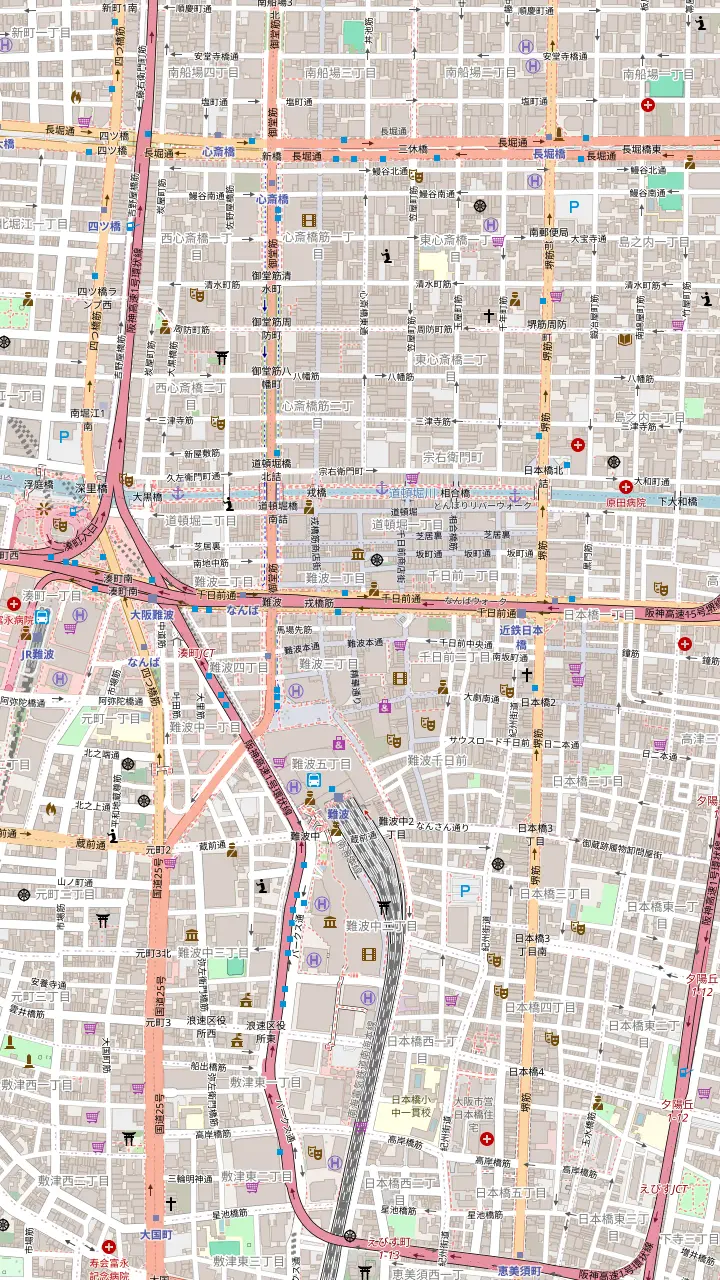
Dotonbori is right outside Namba Station, with giant crabs, octopuses and pufferfish on its signs.
Google MapsA 100-meter alley of kappo, oden, yakitori and sushi restaurants.
Google MapsThe standing-bar district, with over 100 restaurants.
Google MapsAbout 150 stores under a 580-meter arcade.
Google MapsKitchen tools and food samples, 3 minutes on foot from Namba Station.
Google MapsThe station right outside Dotonbori, on the Nankai, Kintetsu and Osaka Metro lines.
Google MapsA riverside promenade that has become popular.
Google Maps
A dining area on the first basement floor of Umeda Sky Building.
Google MapsKnown for yakiniku restaurants in its crowded backstreets.
Google MapsA culinary hub and the historic Korean Town of Osaka.
Google MapsA wholesale market a 3-minute walk from Daikokucho Station.
Google MapsThings kick into full swing around 6 PM.
Google MapsMost visitors come for the restaurants; kushikatsu is the signature.
Google Maps
The second tower is 108 meters tall, including the lightning rod.
Google MapsAbout 180 meters of kushikatsu shops and other eateries.
Google MapsA 5-minute walk to Jan-Jan Yokocho; the guided food walk meets 1 minute from Exit 5.
Google MapsA 6-minute walk to Tsutenkaku from the JR Osaka Loop Line.
Google MapsA 3-minute walk to Tsutenkaku on the Sakaisuji Line.
Google Maps© OpenStreetMap contributors, map data
Dotonbori is where Osaka eats under giant crabs, octopuses and a running man. Here is how the street came to be, what to eat on it, and where to slip off for something quieter.
Editorial team, osakafood.quest · Updated November 6, 2026 · 6 min of reading
Key facts
Dotonbori is named after Yasui Doton, who donated his fortune to dig the river about 12 years after the Battle of Sekigahara.5 Theaters gathered on the south side of the new waterway, and restaurants sprang up spontaneously to cater to theatergoers, their numbers continuing to grow.1 That is the real origin of Dotonbori street food: people who needed to eat quickly before or after a show.
Osaka's tourism bureau describes Dotonbori as the symbolic business and shopping district of Minami, right outside Namba Station.6 The station is served by the Nankai and Kintetsu Railways and the Osaka Metro Midosuji, Sennichimae and Yotsubashi Lines, which makes it the easiest of Osaka's food streets to reach.6 You can step off a train and be eating within minutes.
The street also has a riverside side. The Tonbori River Walk, a riverside promenade, has become popular in recent years.7 This page stays on the food. If you want to eat by the river, buy from a stall and carry the tray to the promenade.
Four food areas around Dotonbori
| Area | What it is | What to look for |
|---|---|---|
| Dotonbori strip | Restaurants on both sides, crowded all year3 | Takoyaki, kushikatsu and big signs2 |
| Hozenji Yokocho | A lane of about 100 meters4 | Kappo, yakitori, oden and sushi4 |
| Ura-Namba | A bar-hopping district since around 201015 | Standing bars and small plates11 |
| Doguyasuji | A 150 meter shopping street16 | Takoyaki and okonomiyaki utensils17 |
These areas are described by Osaka's tourism bureau.3,4,15,16
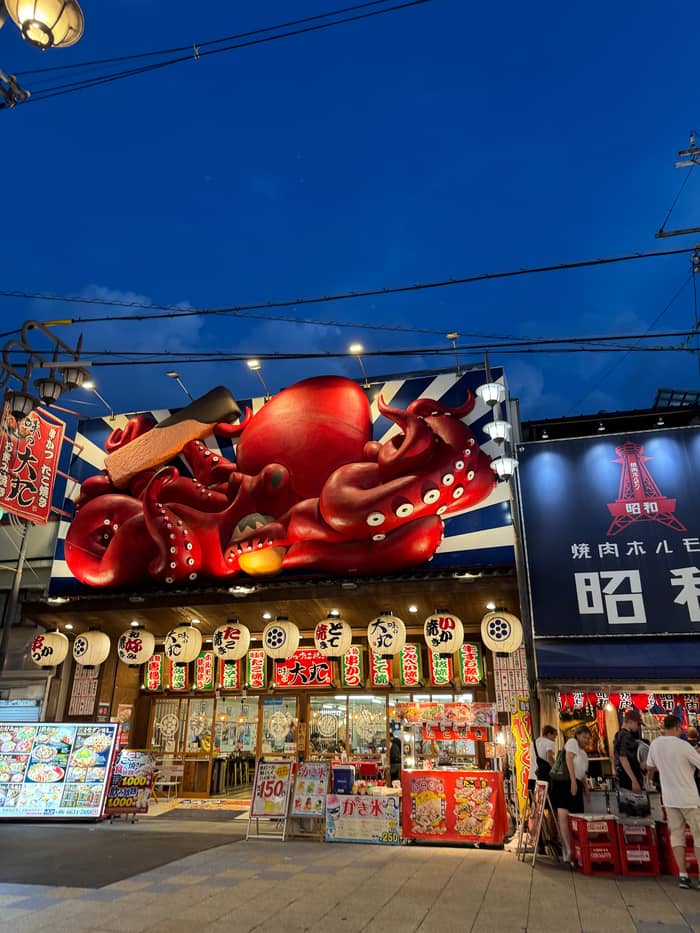
Giant billboards compete for attention here, and the bureau says Dotonbori is now famous for them: besides the Glico sign there are giant crabs, octopuses and pufferfish.2 The octopus is the one to remember when you are hungry, because the stall under it sells the dish the city is known for. Look up, choose a sign, then look down at the menu.
A drumming figure called Kuidaore Taro is a popular photo stop, and the bureau says he is Japan's first robot billboard, created by a Bunraku puppeteer.12 The newest landmark is a Daruma Minister on the rooftop of the Kushikatsu Daruma building, which draws attention with a rotating gimmick.13 Both are free entertainment while a queue moves.
The name Kuidaore means to eat to your heart's content, and it fits the street better than any slogan.14 Dotonbori street is lined on both sides with restaurants of various genres that are crowded throughout the year.3 Go before the dinner rush or after the main crowds to see the signs and still get a seat.
Walking tours through Dotonbori
Each bar is the from price of a listing that passes through Dotonbori.
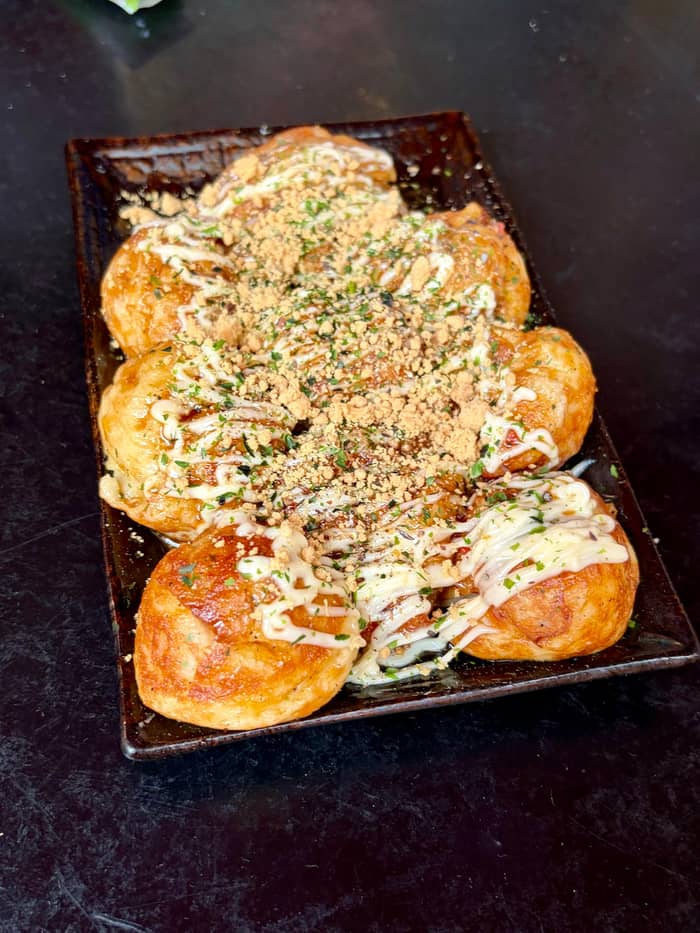
Takoyaki is the obvious first stop. It is a classic Osaka fast food sold from stalls, lined up on a bamboo boat and eaten hot with a toothpick, crisp outside and gooey inside.18,8,19 Osaka's tourism bureau says okonomiyaki and takoyaki can be found in abundance in the Minami area, where Dotonbori sits.20 Share a tray between two so you have room for more.
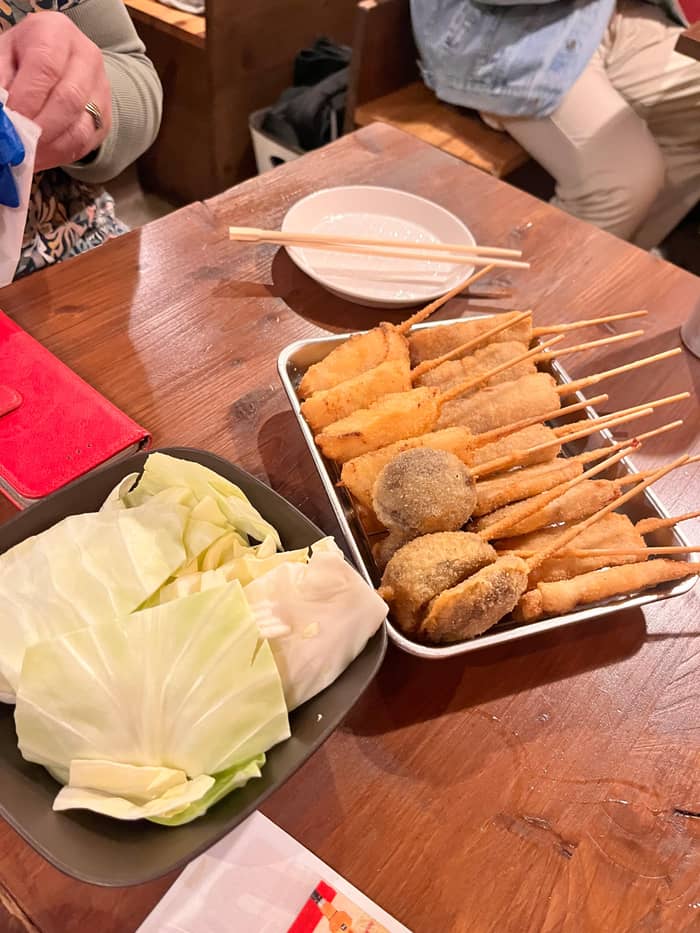
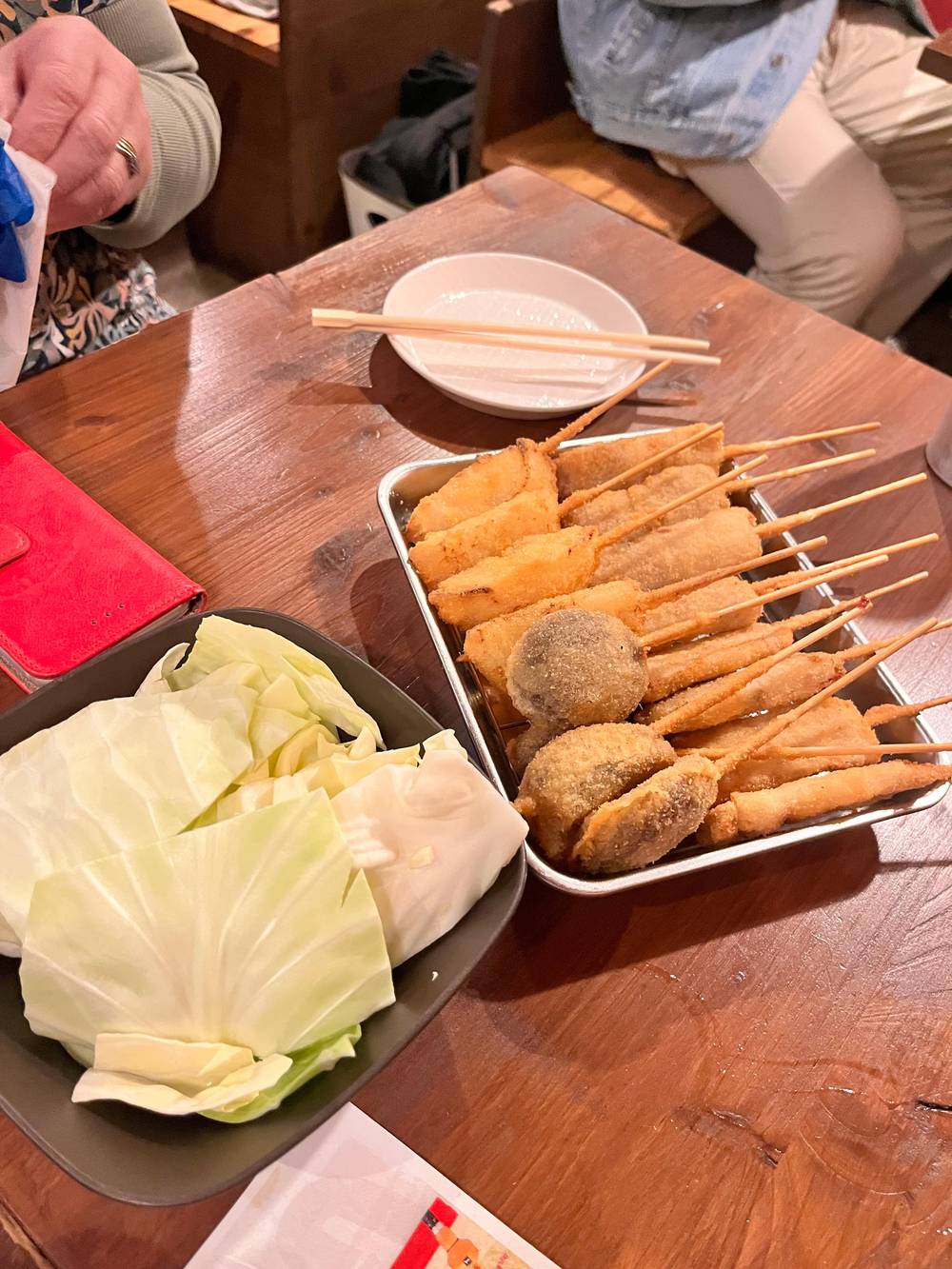
Kushikatsu is the second. The breaded, deep-fried skewers come with a shared sauce you must not double-dip in, and as much cabbage as you like.21,9 The Daruma name on a Dotonbori rooftop is a reminder that kushikatsu is not only a Shinsekai dish.13 The bureau also says there are many kushikatsu restaurants in Osaka beyond Shinsekai.22
Beyond those, Dotonbori Osaka food means restaurants of many genres, from crab to ramen to okonomiyaki griddles.3 Japan's tourism board adds that street food in Japan covers ramen, takoyaki, taiyaki, okonomiyaki, yakitori, gyoza and more.23 A good plan is one stall dish, one sit-down dish and one sweet, with a walk between each.
A short chooser
The strip suits every taste, but it suits some plans better than others.
If I want snacks and signs
Walk the strip with a takoyaki tray
If I want a quiet table
Hozenji Yokocho
The lane is about 100 meters of kappo and oden.4
If I want drinks and small plates
Ura-Namba standing bars
It is known for standing bars.11
If I want a guide
A 2-hour Dotonbori and Namba walk
It starts from $50.
If I want to buy a takoyaki pan
Doguyasuji
It has the best utensil selection in Japan.17
Three Dotonbori tours
Short
Dotonbori and Namba
Budget
Dotonbori and Kuromon
Night
Dotonbori and Uranamba
Expect queues at the best-known counters and plan around them. A short wait is a fair price for takoyaki that has just left the iron, and a long wait is a signal to try the next stall. Japan's tourism board notes that some markets may ask you not to eat or drink while walking, and the polite way to enjoy a hot tray is at the stall or a nearby stand.43
Carry some cash. Japan still has many places where cash is required, even though cashless shopping is increasingly common, and the tourism board advises keeping some on hand.47,44 The most widely accepted cards in Japan are Visa, JCB and Mastercard, but a tiny stall may not take them.46 Tipping is not customary, and saying arigato is enough.45
Mind the weather. Osaka gets very humid in summer, February is the coldest month and the rainy season generally runs from early June to late July.42 A street without a roof is lovely on a dry evening and tiring in a downpour, so keep a plan B in a covered arcade.
Price your walk
Choose how many are coming and see the from price of each walk added up.
4 options compared
Choose how many are coming and see the from price of each walk added up.
≈
View≈
View≈
View≈
ViewConverted at the ECB reference rate, from-prices as listed by GetYourGuide. The precise amount is shown when you book.
One evening on the strip
Arrive
Dotonbori is right outside Namba Station.6
First bite
Takoyaki is sold lined up on a bamboo boat.8
Look up
The signs include giant crabs, octopuses and pufferfish.2
Sit down
Cabbage is free to eat at a kushikatsu counter.9
Slow down
The lane keeps its original width of 2.7 meters.10
Last round
Ura-Namba is known for standing bars.11
For a quieter bite, step into Hozenji Yokocho. The lane was allowed to stay at its original width of 2.7 meters after a petition of 300,000 signatures.10 Its short stretch of about 100 meters is lined with restaurants of all sizes, including kappo, yakitori, oden and sushi restaurants and bars.4 It is a lane for slowing down.
Ura-Namba is the bar-hopping version. It has been a popular bar-hopping spot since around 2010 and stretches from Sennichimae in the north to Nansan-dori in the south, Kuromon Market in the east and Takashimaya in the west.15 The bureau says it is known for standing bars, once the preserve of older men and now popular with young people and women alike.11
Doguyasuji is a different kind of food stop. It is a 150 meter shopping street a 3-minute walk from Namba Station, lined with stores for food samples, lanterns, tableware and kitchen utensils.16 The best selection in Japan of utensils for takoyaki and okonomiyaki is there, so it is where to buy what you ate.17
Video
PiQtour Japan on YouTube · The clip loads only after you tap play.
Restaurants also sprang up spontaneously to cater to theatergoers, and their numbers continued to grow.
Before you go
Several tours pass through Dotonbori on a food route. A GetYourGuide walking tour of Dotonbori, Hozenji and Kuromon Market lasts 2.5 hours from $25 on 23 reviews, and a 2-hour Dotonbori and Namba street food tour starts from $50 on 137 reviews. An evening bar and izakaya crawl through Dotonbori and Ura-Namba lasts 3 hours from $33 on 471 reviews.
A local foodie tour in Dotonbori and Shinsekai lasts 3 hours from $107 on 104 reviews and offers private or small groups. On Viator a Kuromon Market walk passes Namba Grand Kagetsu and Dotonbori on its 2 hours from $52. The Shinsekai and Dotonbori foodie tour on Viator lists 7 pieces of kushikatsu and an okonomiyaki lesson from $109.
Our own tour is based in Shinsekai, not Dotonbori, and runs 3 hours with 18 foods and 3 drinks from $84. If your time is short, pair it with an evening wander along the Dotonbori strip on your own.
Arrive at Namba Station, where the strip begins right outside, and walk the length once without buying anything.6 Note which stalls have queues, which counters have seats and which signs you want to photograph. This first pass costs nothing and stops you from buying the first tray you see.
Then eat in three rounds. Start with takoyaki from a stall, move to a kushikatsu counter for skewers and free cabbage, and finish in a quieter lane such as Hozenji Yokocho or a standing bar in Ura-Namba.8,9,4,11 Keep each round small so that the third still feels like a pleasure instead of a duty.
If you would rather not plan it, let a guide do it. A Dotonbori and Namba food walk of 2 hours from $50 is the lightest commitment among those listed here. Whatever you choose, leave time at the end to stand under the signs with a last snack and watch the crowd go by.
FAQ
It is right outside Namba Station on the Nankai, Kintetsu and Osaka Metro lines.6
He donated his fortune to dig the river about 12 years after the Battle of Sekigahara.5
It is a lane of about 100 meters lined with kappo, yakitori, oden and sushi restaurants.4
A GetYourGuide tour of Dotonbori and Namba lasts 2 hours from $50.
Japan still has many places where cash is required.47
Sources
More to read
Questions about the Shinsekai food walk? A real person replies here.