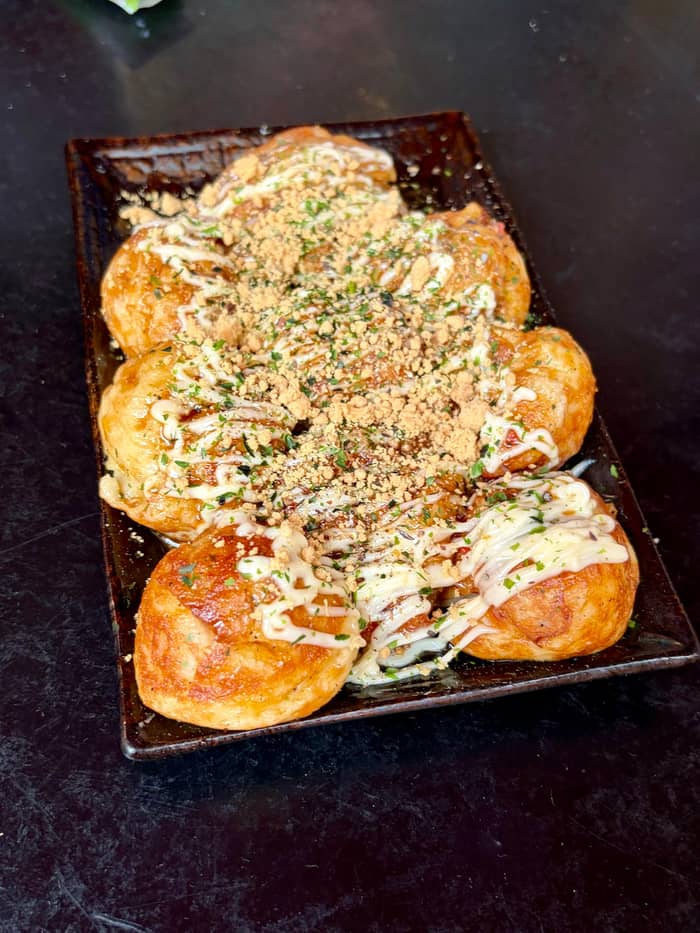
Lowest
The budget walk
Dotonbori and Kuromon
- Length2.5 hours
- Rating4.9 from 23 reviews
- CancelFree until 24 hours before
Price for your party
4 options compared
Choose how many are coming and see the from price of each way of eating added up.
≈
View≈
View≈
View≈
ViewConverted at the ECB reference rate, from-prices as listed by GetYourGuide. The precise amount is shown when you book.
Eating in Osaka can be cheap or lavish. See what a convenience store bento, a guided food walk, a cooking class and a night of small plates cost, and where the money goes.
Editorial team, osakafood.quest · Updated November 6, 2026 · 6 min of reading
Key facts
Not by the standards of most big cities. Japan's tourism board says, in its guide for Australian visitors, that food prices in Japan are comparable to, if not cheaper than, Australia, so you can sample something new every day without breaking the bank, unless you want Michelin-starred meals.4 Osaka's own tourism bureau calls its cheap and delicious street food konamon and puts it at the center of Kansai food culture.5
The honest answer depends on how you eat. A convenience store or station bento costs 400 to 900 yen, which sets the floor.1 A guided tour with 18 foods and 3 drinks starts from $84, which sets a comfortable middle. A tour that adds a dessert and dinner-style stops can reach $231.
We state no per-dish Osaka street food price on this page. Neither Osaka's tourism bureau nor Japan's tourism board publishes a price list for street food, and a stall's price can change without notice. What the sources do give is a floor, tour prices and a few extras, and those are what the sections below add up.
Price points in one table
| Way of eating | Price point | What it covers |
|---|---|---|
| Convenience store bento | 400 to 900 yen1 | A packed meal8 |
| Dotonbori and Kuromon walk | $25 | 2.5 hours with a guide |
| Namba small-group tour | $41 | Drinks and snacks, extra cash only |
| Our Shinsekai tour | $84 | 18 foods and 3 drinks |
| Takoyaki feast class | $35 | 2 hours, all you can eat |
| Premium dessert tour | $231 | 4 food stops, 1 drink, dessert |
Tour and class prices are from prices; the bento range is the tourism board's figure in yen.1
Convenience stores are the budget backbone: they stock kara-age, onigiri, bento boxes and snacks, and most are open 24 hours.8 A bento from a convenience store or train station costs 400 to 900 yen.1 Stand-up noodle shops are the next rung, and Japan's tourism board says you may need to buy a meal ticket from a vending machine first.6
Department store basements are a third option. A depachika is the basement food and grocery floor of a department store, and wandering through its rows of delicatessens is an experience in itself.9 You can point to what is on display, which makes buying simple and avoids any menu guesswork.
Street stalls fit the same budget logic. Osaka's tourism bureau groups takoyaki and okonomiyaki as konamon, cheap street food that is a major part of Kansai food culture.5 The average meal cost in Osaka therefore swings a lot: one day can be a bento and a skewer, the next a sit-down tasting. Decide which kind of day you are having before you check a wallet.
Tours and classes by price
Each bar is the from price on the listing.
Tour prices are the clearest numbers on offer, so here is the range. GetYourGuide lists a Dotonbori, Hozenji and Kuromon walk from $25, a 2-hour street food tour from $50 and a Shinsekai tour limited to 8 participants from $71. Viator lists a small-group Namba tour from $41 and a Kuromon walk from $52.
Read what the price covers. Ours includes 18 foods, 3 drinks and a guide, and additional food and drinks are not included. The Namba tour lists alcoholic beverages and snacks but warns that guests spend around JPY 3,000 to 4,000 extra, cash only. One Dotonbori and Shinsekai walk lists a transportation cost of 190 JPY as not included.
So the real cost of a tour is its from price plus whatever you add. If you want dessert, a second drink or souvenirs, add a margin. If you eat only what is included, the from price is close to the whole bill, and the free cancellation window on most of these listings lets you commit without much risk.
A short chooser
Decide how much of your day is food, then choose the level that fits.
If I want the cheapest fill
A convenience store bento
It costs 400 to 900 yen.1
If I want a guide on a budget
A Dotonbori and Kuromon walk
It starts from $25.
If I want the most food for the money
Our 18-food Shinsekai tour
It includes 18 foods and 3 drinks.
If I want to learn to cook
A takoyaki class
It starts from $35 for 2 hours.
If I want dessert and dinner stops
The premium Viator tour
It starts from $231.
Three price levels
Lowest
Dotonbori and Kuromon
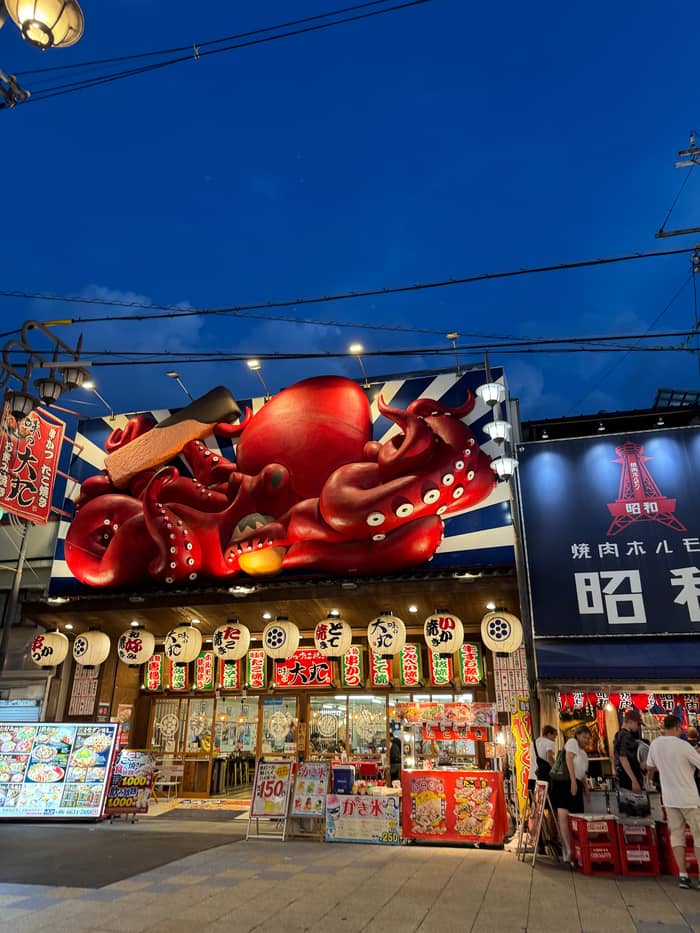
Middle
Shinsekai, 8 guests
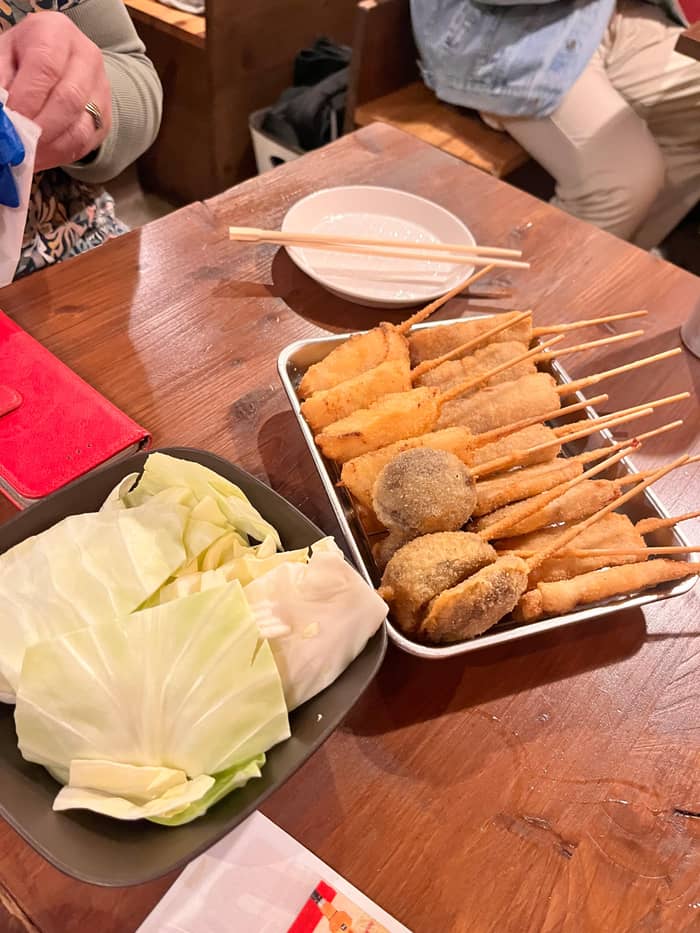
Higher
Dotonbori and Shinsekai
A class is an unusual way to price a meal, but it does include the meal. A takoyaki making session with all you can eat and drink lasts 2 hours from $35. A vegan and vegetarian sushi making experience lasts 1.5 hours from $45. A sake tasting with takoyaki cooking lasts 2 hours from $70, and a class on okonomiyaki and takoyaki lasts 2 hours from $70.
Compared with a walk, a class feeds you in one place and teaches a skill you can repeat. Doguyasuji, a 150 meter shopping street near Namba Station, sells the utensils, and the best selection in Japan of takoyaki and okonomiyaki utensils is there.12,13 That is a cost to add if you want to take the habit home.
A class is also less exposed to weather and to queues. If a rainy week is forecast, a class under a roof is a safer buy than a walk, and both can be cancelled free up to 24 hours before on the listings above. Osaka's rainy season generally runs from early June to late July.14
Where a food budget goes
Breakfast
A bento costs 400 to 900 yen.1
Midday
You may buy a meal ticket from a vending machine first.6
Afternoon
Takoyaki is a classic fast food sold from stalls.7
Evening
Our tour starts from $84 for 18 foods and 3 drinks.
Extras
Additional food and drinks are not included in ours.
The bill
There is no custom of leaving tips in Japan.2
There are still many places in Japan where cash is required, even though cashless shopping is increasingly common.3 The most widely accepted credit cards are Visa, JCB and Mastercard, but Japan's tourism board advises always keeping some cash on hand to be on the safe side.15,10 A small stall is exactly the kind of place that may ask for coins.
Tipping is the easy part. Tipping is not common in bars, cafes, restaurants, taxis and hotels in Japan, and Osaka's bureau says that if you feel grateful you can simply say arigato.16,2 You will never need to calculate a percentage, which makes a food budget easier to predict than in many countries.
One caution about money in a queue: the vending machine at a stand-up noodle shop may want cash for the meal ticket, so keep small notes.6 The listings you book online are paid in advance or later through the platform, which is a separate matter from what you spend at the stalls.
Video
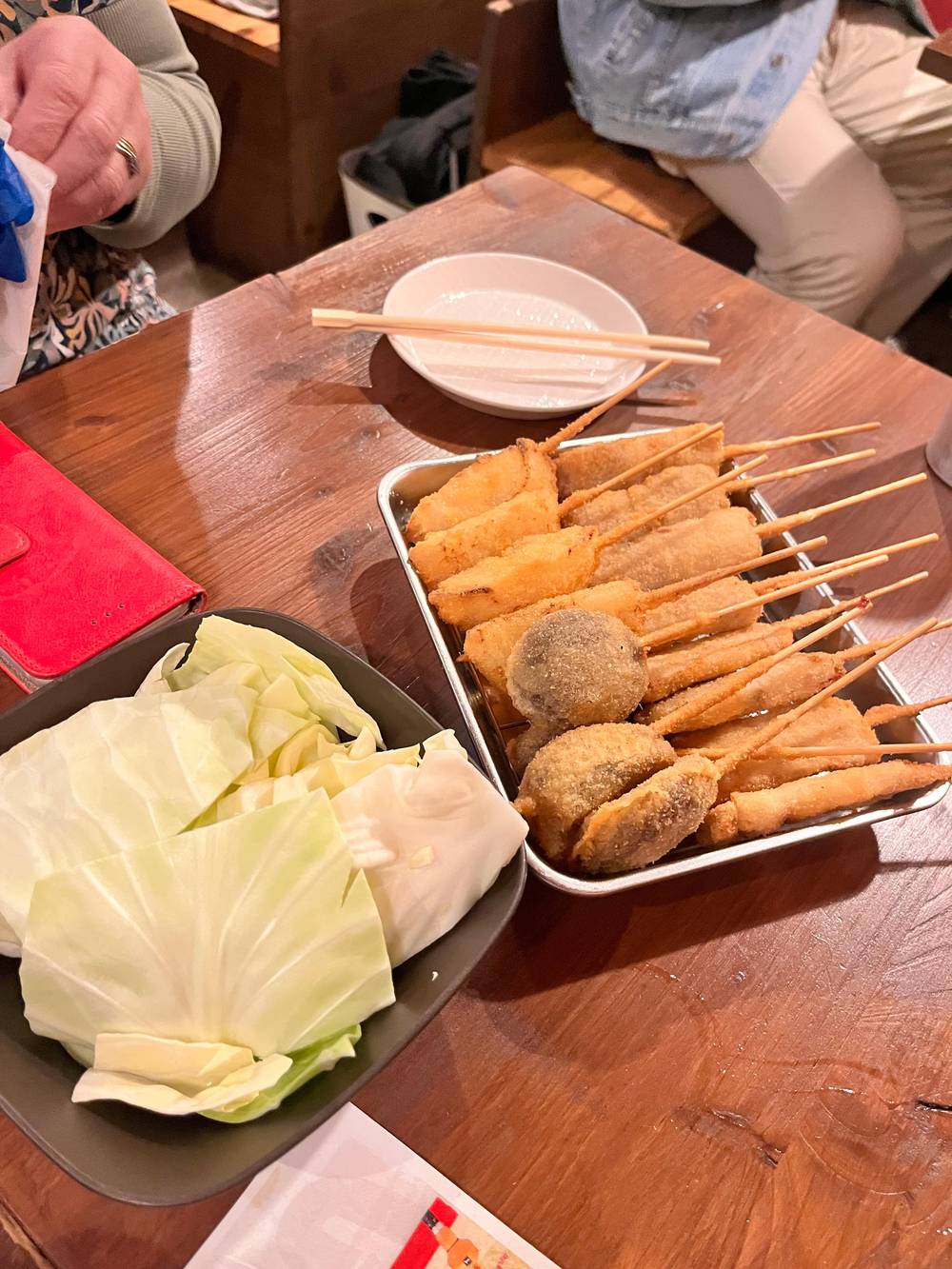
Locavore Eats on YouTube · The clip loads only after you tap play.
In Japan, there are still many places where cash is required, however, in recent years, cashless shopping has become increasingly common.
Before you spend
Mix levels. Eat a bento breakfast, a stall snack at midday and spend your one splurge on the evening. A shared tray of takoyaki stretches a budget, and a few skewers of kushikatsu with free cabbage fills the gaps.17 Osaka rewards people who eat small and often.
Compare the same kind of tour across platforms. A tour with 15 dishes and 3 drinks is listed on GetYourGuide from $62, while the matching Viator listing starts from $76, so the platforms differ by the day and the listing. Open both before you book.
Finally, use free cancellation. Ours can be cancelled up to 24 hours before for a full refund, so you can book early and still change your mind. Plan a free hour for a stall you stumble on, too; some of the best Osaka meals cost less than a coffee elsewhere.
A meal is not the only line in a food day. One Dotonbori and Shinsekai walk lists a transportation cost of 190 JPY as not included, which is a reminder that moving between districts is its own small expense. Our own tour starts and ends in one district, outside MEGA Don Quijote Shinsekai, a 1-minute walk from Dobutsuen-mae Station, Exit 5.
Weather changes spending too. Osaka gets very humid in summer, and a cold drink or a shaved ice stop is easy to add without noticing.14 In winter Japan's tourism board suggests hot sake and a bowl of bubbling hot-pot, which are a different kind of treat.18 Budget a little for whatever the season invites.
Finally, remember the price you see online is a from price. The final fare depends on the date and the size of your party, and the booking step shows what you pay exactly. Treat the numbers here as a map of the territory and the booking page as the bill.
FAQ
A bento is 400 to 900 yen, while our guided tasting starts from $84 for 18 foods and 3 drinks.1
Osaka's tourism bureau calls it cheap and delicious konamon, but publishes no per-dish prices.5
There is no custom of leaving tips in Japan.2
The cheapest listing here is a GetYourGuide walk and the dearest a Viator tour with a dessert.
Additional food and drinks are not included in our listing.
Sources
More to read
Questions about the Shinsekai food walk? A real person replies here.