First night
Namba and Dotonbori
Neon, canal, lanes
See the guided walkFind a stop on the map
View 18 stops
Pick a route, then tap a marker or a stop for notes and a Google Maps link.
A dining area on the first basement floor of Umeda Sky Building.
Google MapsKnown for yakiniku restaurants in its crowded backstreets.
Google MapsA culinary hub and the historic Korean Town of Osaka.
Google MapsA wholesale market a 3-minute walk from Daikokucho Station.
Google MapsThings kick into full swing around 6 PM.
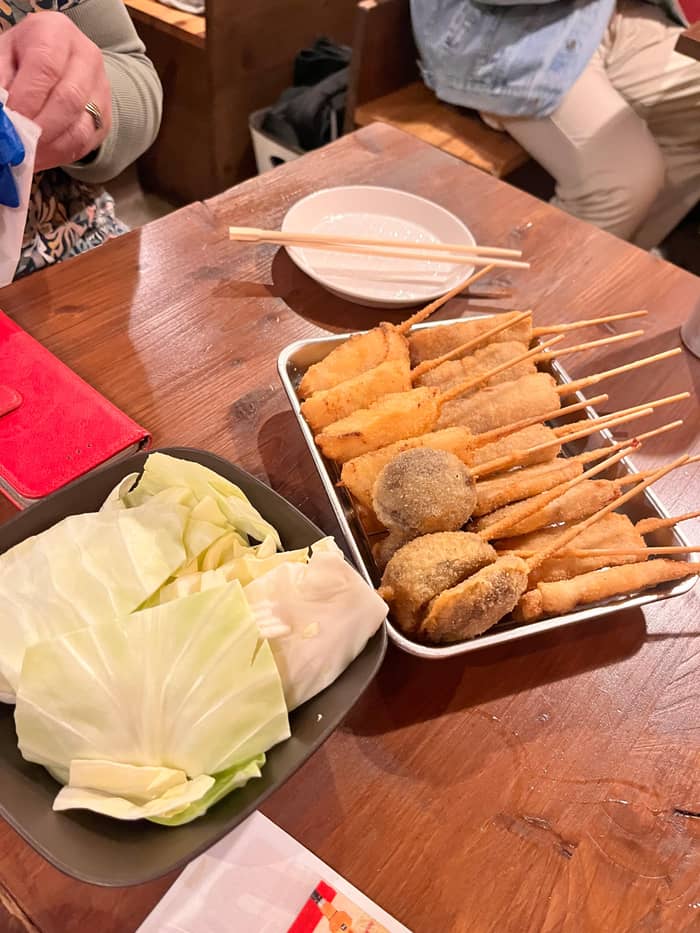
Google MapsMost visitors come for the restaurants; kushikatsu is the signature.
Google Maps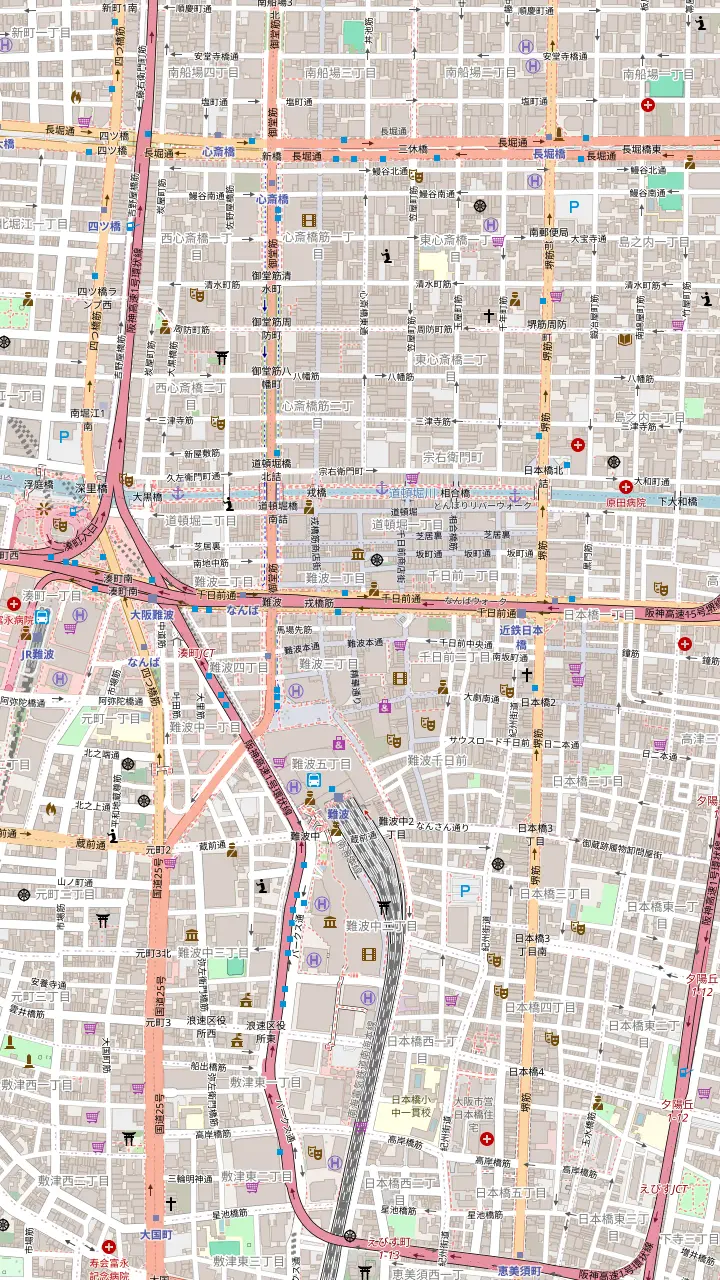
Dotonbori is right outside Namba Station, with giant crabs, octopuses and pufferfish on its signs.
Google MapsA 100-meter alley of kappo, oden, yakitori and sushi restaurants.
Google MapsThe standing-bar district, with over 100 restaurants.
Google MapsAbout 150 stores under a 580-meter arcade.
Google MapsKitchen tools and food samples, 3 minutes on foot from Namba Station.
Google MapsThe station right outside Dotonbori, on the Nankai, Kintetsu and Osaka Metro lines.
Google MapsA riverside promenade that has become popular.
Google Maps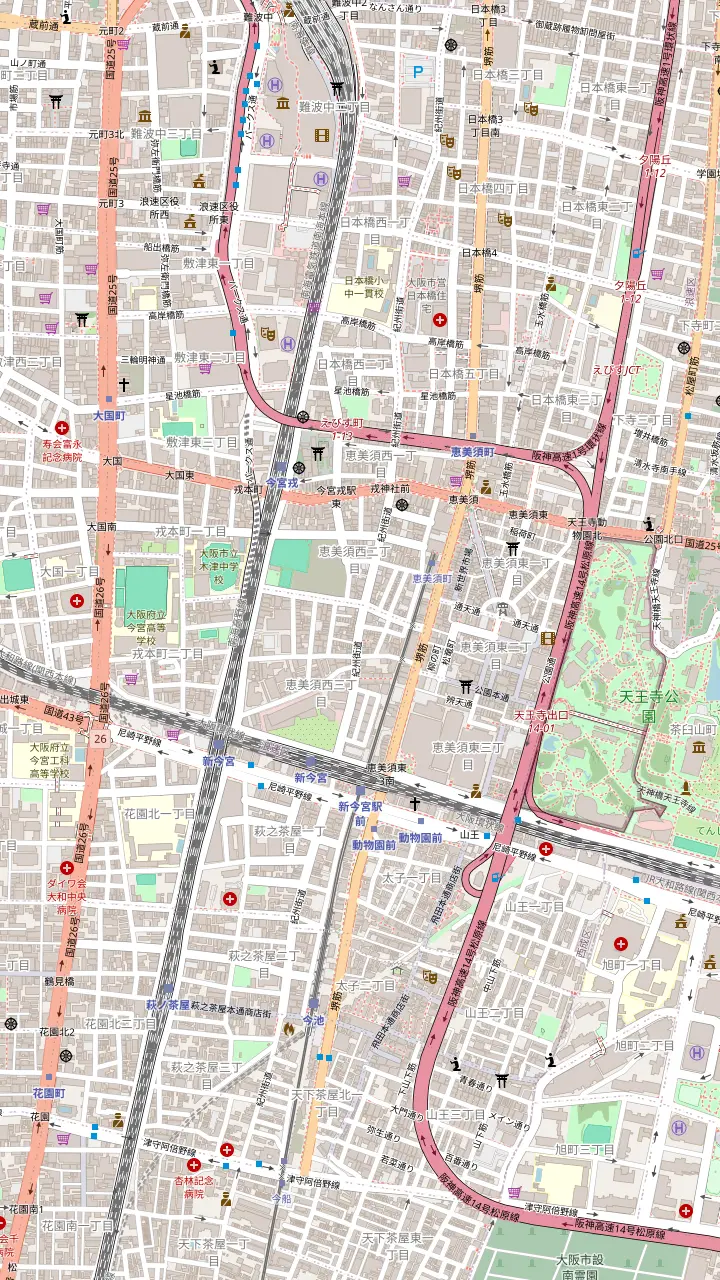
The second tower is 108 meters tall, including the lightning rod.
Google MapsAbout 180 meters of kushikatsu shops and other eateries.
Google MapsA 5-minute walk to Jan-Jan Yokocho; the guided food walk meets 1 minute from Exit 5.
Google MapsA 6-minute walk to Tsutenkaku from the JR Osaka Loop Line.
Google MapsA 3-minute walk to Tsutenkaku on the Sakaisuji Line.
Google Maps© OpenStreetMap contributors, map data
Osaka's food is spread across several districts, each with its own mood and its own hours. Here is what each does best, how far it is from its station and how to pair two of them in a day.
Editorial team, osakafood.quest · Updated November 6, 2026 · 6 min of reading
Key facts
Osaka rewards the traveler who picks a district first and a dish second. The city has big urban hubs: Kita around Osaka Station and Umeda, and Minami from Dotonbori to Namba and beyond. Japan National Tourism Organization calls Minami the sassy and outspoken cousin of Kita,1 which is a fair description of how the food feels in each.
Midosuji, the main boulevard, runs over four kilometers from Umeda to Namba,6 so both hubs sit on one long straight axis. You can eat in Umeda at lunch and in Dotonbori at dinner without a complicated plan. Pick the districts that match your mood, and keep each to one meal. If you are collecting must-eat restaurants in Osaka, sort them by district first.
A sensible rule is to match district and time of day. Markets and lunch counters suit daytime. Neon streets and bars suit the evening. Backstreets with grilled meat suit a late dinner. The sections below follow that order, from Minami's bright streets outward, and each one gives a station and a walking time so you can place it on a map.
Compare the districts
| District | Best for | Arrive at | Walk |
|---|---|---|---|
| Dotonbori | Neon and a first bite14 | Namba Station15 | Right outside |
| Shinsekai | Kushikatsu2 | Ebisucho Station20 | 3 minutes20 |
| Takimi-koji | Showa-style sit-down meals3 | JR Osaka Station22 | 9 minutes22 |
| Tenma | Yakiniku and izakaya4 | Tenma, Loop Line23 | 1 stop from Osaka |
| Tsuruhashi | Early lunch24 | Tsuruhashi, Loop Line5 | On the Loop Line |
| Kizu Market | Saturday market morning25 | Daikokucho Station19 | 3 minutes19 |
Descriptions and walking times come from the Osaka Convention & Tourism Bureau and the Japan National Tourism Organization.5,22
Dotonbori is the obvious starting point and it earns the fame. It was named after Yasui Doton, who donated his personal fortune to dig the river,12 and restaurants sprang up to cater to theatergoers.13 The signs are the show: giant crabs, octopuses and pufferfish decorate the street.14
Getting there is easy. Dotonbori is right outside Namba Station on the Nankai and Kintetsu Railways and the Osaka Metro Midosuji, Sennichimae and Yotsubashi Lines.15 The Tonbori River Walk, a riverside promenade, has also become popular.16 Walk the promenade first, then pick a restaurant on the other side of the river.
North of the canal, Ebisubashi-suji, the nearest thing Namba has to a food street in Osaka's center, runs from Ebisubashi in the north to Takashimaya Osaka in the south.17 It is a shopping street first, with food on the side streets. Use it as a spine, and dip into lanes on either side when a smell or a queue catches your eye. This is the district for first-timers and for anyone who wants a classic Osaka evening. Come hungry, set a rough budget for the night, and decide in advance whether you want one big meal or several small stops, because the street makes both easy and the choice shapes the whole evening.
The best eating in Minami is often one lane off the main street. Hozenji Yokocho is a short 100-meter stretch lined with restaurants of all sizes, with kappo, yakitori, oden and sushi restaurants and bars.26,30 It suits a slow, seated dinner in a quiet corner.
Ura-Namba is the standing-bar district, with over 100 restaurants and a diverse collection of standing bars.31,32 It stretches from Sennichimae in the north to Nansan-dori in the south.33 It is the place for small plates and short stops, not a long sit-down meal.
Doguyasuji, 3 minutes on foot from Namba Station, is the street of kitchen tools and food samples rather than restaurants.18,34 It is worth a short visit for souvenirs, and it pairs with Kuromon Market on the same side of the neighborhood. Treat these three as a cluster and you can eat, shop and drink in the same neighborhood. A common mistake is to cross the whole district for a single famous shop; the lane next to you is usually good enough, so save the long walks for the days you plan around them.
Pick a district
Match your wish to the row and head for that district
If I want the classic Osaka evening
Dotonbori and Namba
Neon signs, a riverside promenade and a station next door.14,16
If I want fried skewers
Shinsekai
The district is famous for kushikatsu.2
If I want a sit-down meal under one roof
Takimi-koji in Umeda
It offers kushikatsu, okonomiyaki, izakaya and cafes.29
If I want grilled meat and a quiet bar
Tenma
If I want an early lunch
Tsuruhashi
JNTO calls it excellent for an early lunch.24
Three dinner districts
First night
Neon, canal, lanes
See the guided walk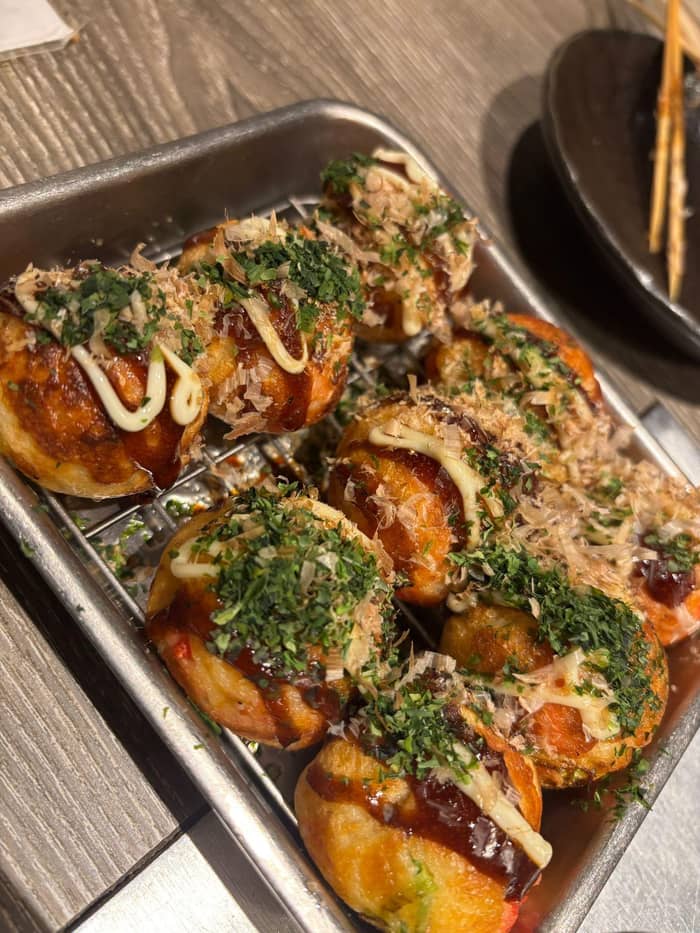
Fried food
Fried skewers and a tower
See the guided walk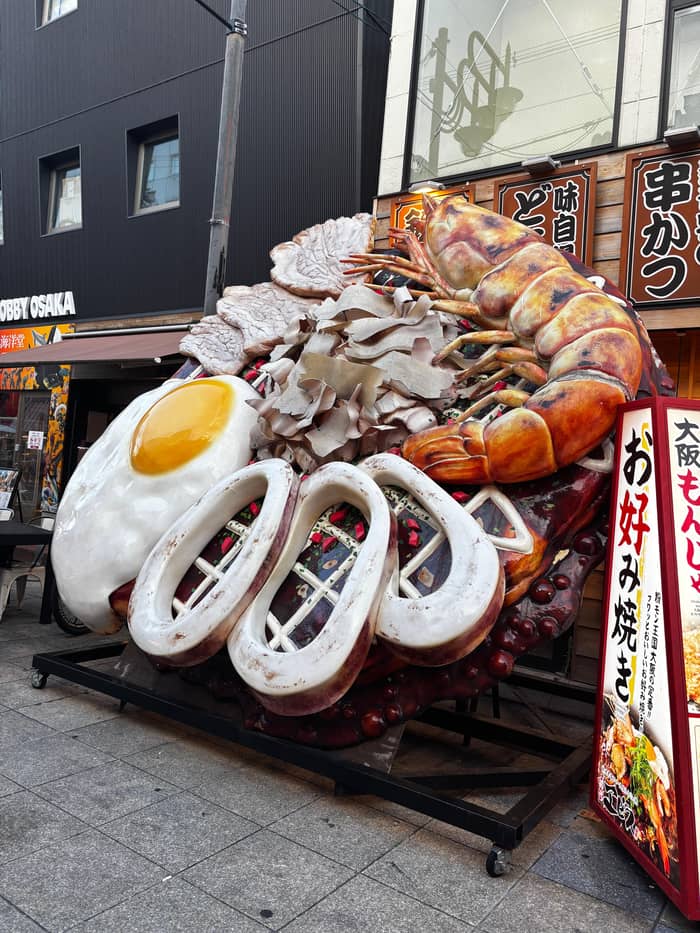
Locals' evening
Grill and craft beer
See the guided walkSouth of the center, Shinsekai is the district to choose for kushikatsu. The Japan National Tourism Organization says most visitors come to Shinsekai for the restaurants, since the area is famous for kushikatsu.2 Jan-Jan Yokocho runs about 180 meters and is flanked by kushikatsu, yakiniku, sushi, udon and standing izakaya.27,40
Tsutenkaku is a 3-minute walk from Ebisucho Station,20 and Jan-Jan Yokocho is a 5-minute walk from Shin-Imamiya or Dobutsuen-mae Station.21 It is easy to reach by train. Allow a couple of hours, as JNTO suggests for Tsutenkaku and Shinsekai.41
This is also where the site's guided food walk runs. It lasts 3 hours, visits 4 eateries and offers 18 foods and 3 drinks. If you would rather not choose between the shops, the walk saves you the decision, and it is the most structured way to eat in the district.
Dates on the map
1882
The kitchen-tool street started when antique and general merchants opened stores.7
1912
The New World district was built as an amusement park.8
1929
Vendors began selling battered skewers to local laborers.9
1970
Doguyasuji received its roofed arcade.10
About 2010
The district became a popular bar-hopping spot.11
Kita, the northern half of Osaka, eats well too. Takimi-koji is a dining area on the first basement floor of the Umeda Sky Building, designed as a retro townscape that recreates the early Showa period.3 It is about 9 minutes on foot from JR Osaka Station.22
The range is wide. The bureau lists popular dishes such as kushikatsu and okonomiyaki, plus Western cuisine, izakaya and cafes.29 JNTO describes the area as a replica of the Osaka cityscape in the Showa era.42 It is a good option if you are staying near Osaka Station and want a sit-down meal without crossing the city.
Come here when the weather is bad or when you have arrived late by train. Everything is under one roof, the setting is a talking point, and it is a calm contrast to the neon streets of the south.
Video
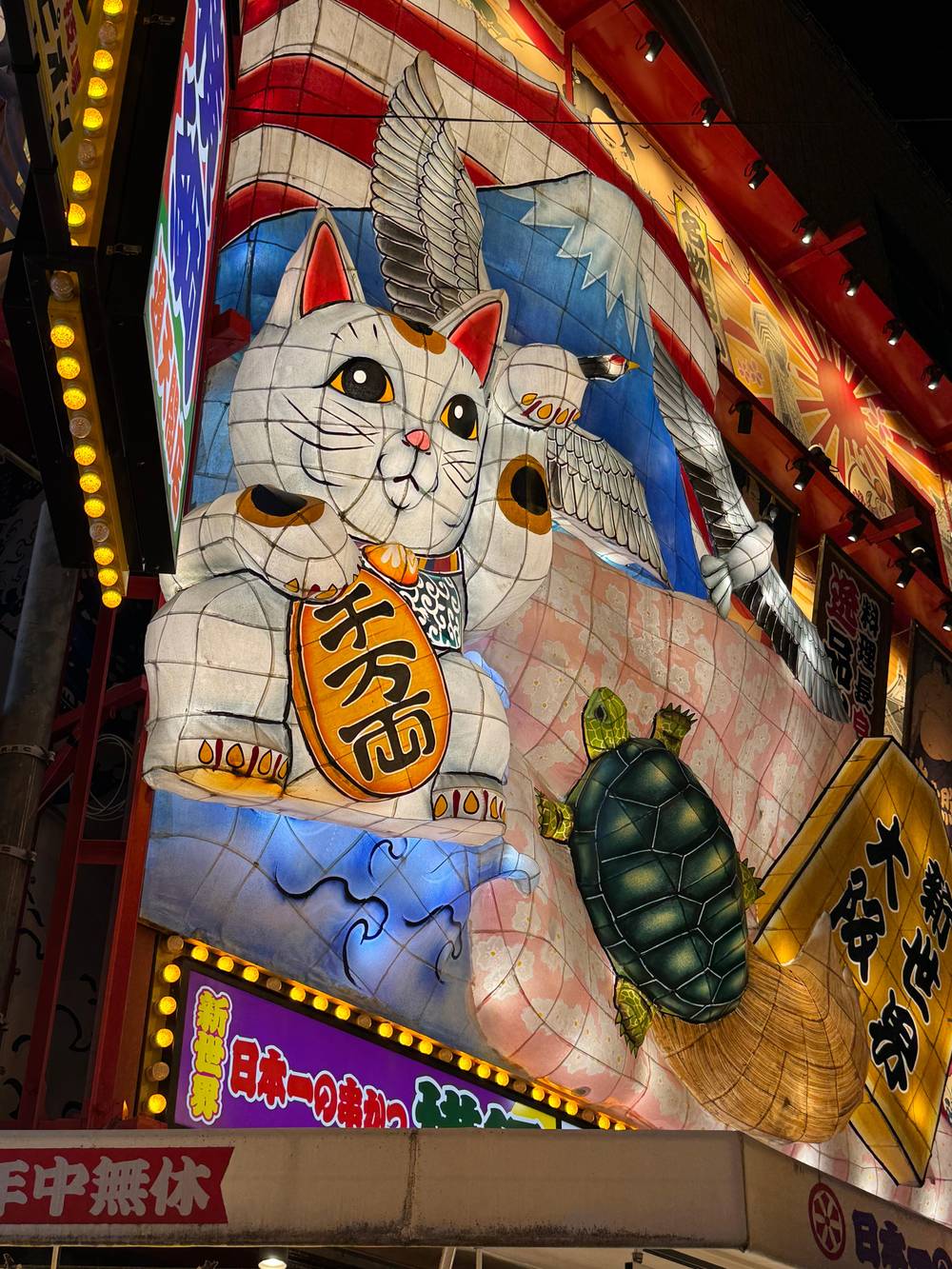
Sunny in Japan on YouTube · The clip loads only after you tap play.
Tenma is renowned for the fantastic yakiniku (grilled meat) restaurants in its crowded backstreets.
District kit
Two districts on the Loop Line serve a more local crowd. Tenma is one stop from Osaka Station,23 and it is renowned for yakiniku restaurants in its crowded backstreets.4 It also has hole-in-the-wall bars, traditional izakaya and craft beer spots.28
Tsuruhashi is a well-known culinary hub and the historic Korean Town of Osaka.5 JNTO calls it an excellent place for an early lunch.24 The Loop Line goes there from Osakajokoen Station in 3 stations,39 so it fits between a morning at Osaka Castle and an afternoon in the south.
Both districts feel more like neighborhoods than stages. Come hungry, order from the counter or the menu board, and share. If you are not sure what to order, point at what the next table has. Choose Tsuruhashi for lunch and Tenma for dinner, and you will cover two sides of the city's grilled-meat habit.
One more cluster is the market side of the city. Kizu Market has a history of over 300 years and houses approximately 150 wholesalers.43,44 It is near Daikokucho Station, one stop south of Namba,45 and the wholesale site is a 3-minute walk from Exit 1.19
Its morning market is open to the public on the second and last Saturdays of each month from 9:00 AM to 12:00 PM.25 Kuromon Market, in contrast, is an everyday arcade with approximately 150 stores under a 580-meter arcade and an eat-in corner.35,46 Between them you can build a market morning on almost any day of the year.
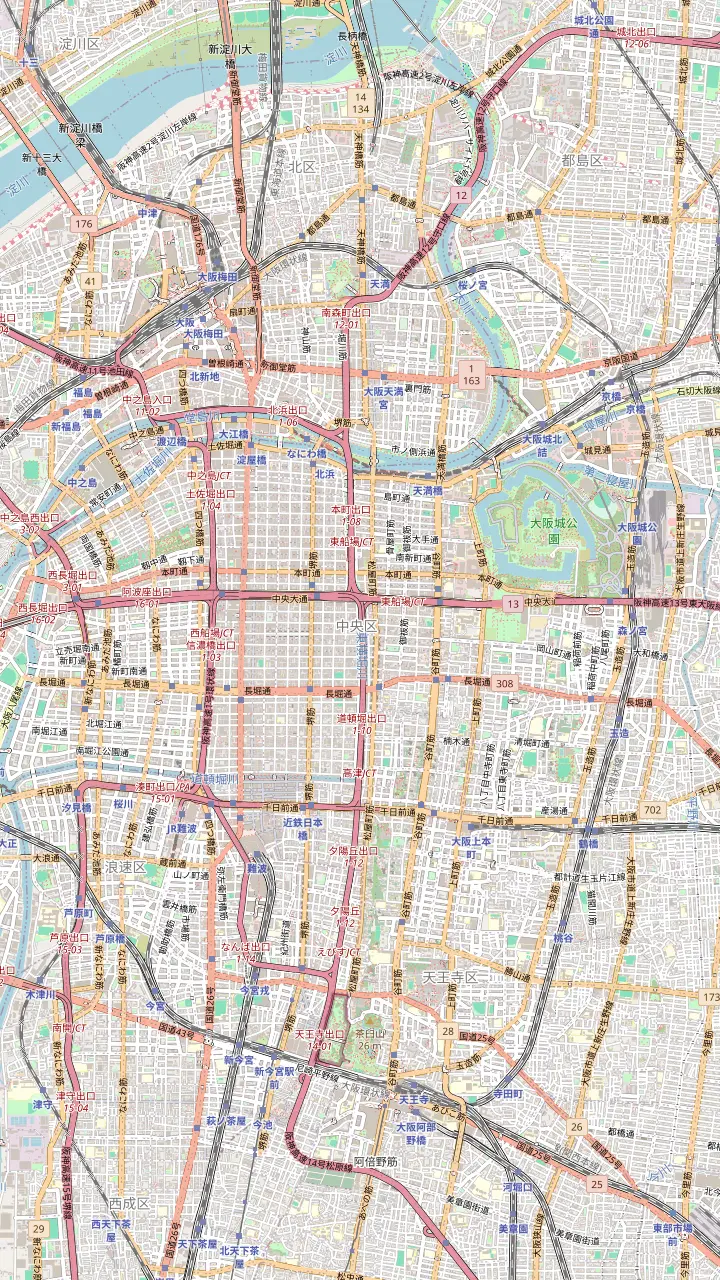
To choose between all these districts, start from your time of day and your station. If you are in Minami at noon, eat in the lanes behind Namba. If you are in Umeda at lunch, use Takimi-koji. If you want fried skewers, go south to Shinsekai in the afternoon or evening. If you want yakiniku, go to Tenma for dinner. The map on this page has a pin for each.
FAQ
Minami has the densest food streets, from Dotonbori to Namba and beyond.1
The area is famous for kushikatsu.2
It is on the first basement floor of the Umeda Sky Building.3
JNTO calls Tenma renowned for its yakiniku restaurants.4
JNTO calls it an excellent place for an early lunch.24
It is right outside the station on several lines.15
The bureau gives the walk from JR Osaka Station.22
It lasts 3 hours and visits 4 eateries.
Sources
More to read
Questions about the Shinsekai food walk? A real person replies here.