Ask first
Our Shinsekai tour
Partly accommodates
- VegetarianSomewhat, tastings may drop
- Gluten-freeNot fully
- CancelFree until 24 hours before
Tap-to-check list
Street food walking tour in Shinsekai, Osaka
★ 5.0 · 3,964 guest reviews
The short version
Vegetarian and vegan eating in Osaka needs planning, because even stocks and sauces usually contain meat ingredients, so say no dashi when you order.
Three things to do
Checklist · 9 tasks
Check things off as you go; your progress is kept on this device.
0 / 9 ready
You are good to go. Only the day is left: your appetite and the meeting spot.
Reserve a spotOsaka runs on dashi, octopus and pork, which makes special diets tricky but not impossible. See how to order, which tour listings say what, and where to look for help.
Editorial team, osakafood.quest · Updated November 6, 2026 · 6 min of reading
Key facts
Osaka is a city of octopus, pork, beef and fish stock, so a vegetarian or halal visitor starts at a disadvantage. Japan's tourism board says Japanese cuisine uses a lot of meat and fish, and even stocks and sauces usually contain some meat ingredients.1 Hidden ingredients such as meat or bonito flakes can make a dish unfriendly to vegans.4 The problem is not what you can see on the plate.
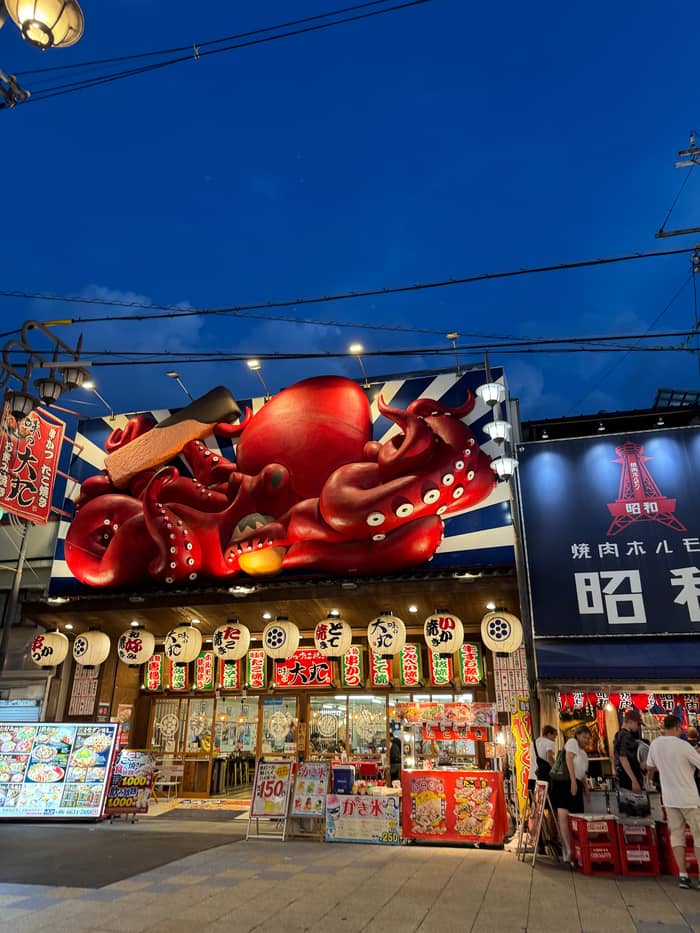
The city's signature flavor is dashi. Osaka's version is made from kelp from Hokkaido and bonito flakes from Tosa, with dried sardines from the anchovies of Osaka Bay.5 Takoyaki and okonomiyaki both dissolve flour in dashi.6,7 That is why a dish that looks vegetable-based can still carry fish.
The tourism bureau is optimistic about the trend. It says the number of vegan-friendly restaurants in Osaka is increasing, and that Osaka specialties are available in vegan style, with plenty of places to enjoy them.8,9 The key is to plan, rather than hope that a stall will adapt on the spot.
What tour listings say
| Listing | Vegetarian | Gluten-free or allergies |
|---|---|---|
| Our Shinsekai tour | Somewhat accommodated, tastings may drop | Not fully accommodated |
| 20-dish Shinsekai tour | Full accommodation not offered | Full accommodation not offered |
| 15-dish tour | Vegans cannot join | Cannot join |
| Hungry Osaka tastings | Cannot cater | Cannot cater |
| Backstreet night walk | Option available on request | Not stated |
These are the listings' own lines; ask the operator before you book.
Simply requesting a vegetarian meal in Japan may not be sufficient.14 Japan's tourism board advises being specific about what you cannot eat: no meats, seafoods or animal products including dashi or stocks.2 If the waiter seems unsure, say that no meat also includes chicken, pork and fish.15 What may look like reluctance can simply be a lack of understanding.
Print a card. The board suggests carrying a printed explanation of your dietary requirements in Japanese, and notifying a restaurant in advance when reserving, especially for a set menu.11,10 Photo menus help, but the board warns that you should still check the dashi and base ingredients for fish or animal products.16
Use a translation app for the details. Ask about dashi, fried food oil and sauces, and ask again at the counter. A friendly question works better than a long argument, and most staff will do their best once they understand what you cannot eat.
Diet-aware options by price
Each bar is the from price of a listing that states how it handles diets.
Many veggie restaurants display an official vegan or vegetarian sticker issued by the Japan Vegan Society, VegeProject Japan or the Japan Vegetarian Association.18 Osaka's tourism bureau points vegans to HappyCow, which it describes as the world's largest plant-based eating and drinking guide.19 Use both to build a shortlist before you land.
For a hands-on option, a GetYourGuide sushi class aimed at vegans and vegetarians in Dotonbori lasts 1.5 hours from $45, is wheelchair accessible and holds a 4.6 rating from 13 reviews. It is a small review base, so read the listing closely. It is nonetheless one of the few listings here that names the diet in its title.
An Osaka vegetarian food tour is a harder fit. Most of the guided walks in this guide serve octopus, pork and fish, so a plant-based diet usually needs a conversation before booking. Ask what the stops are, what the tastings contain and whether the operator can reduce them, and keep the answer in writing.
A short chooser
Start with how strict your diet is, then choose how much help you want.
If I am vegan and strict
The vegan sushi class and a printed card
The class names the diet and the card explains dashi.11
If I am vegetarian and relaxed
Our tour, with a note beforehand
It can somewhat accommodate vegetarians.
If I follow halal rules
A halal-friendly tour or certified restaurant
There is no central agency, so use the resources JNTO lists.3,17
If I am gluten-free
Skip the tours that cannot cater
Ours cannot fully accommodate it.
If I just want a safe snack
A convenience store onigiri with umeboshi
Such options are usually in the fridge.12
Three places to start
Ask first
Partly accommodates
Plant-based
Dotonbori kitchen
Ask about diets
Nanba kitchen
Japan's tourism board lists vegetable tempura, tsukemono, tofu, nasu dengaku and kappa maki as dishes to try, and notes that you may find a vegetarian okonomiyaki, though not a vegan one because of egg.21 Osaka's classics are the harder part: kitsune udon is carried by a dashi made with kelp and bonito flakes, so ask before you order it.22
Convenience stores are the safety net. Onigiri are often filled with fish, but there are usually umeboshi and kombu options.12 Ready-to-eat natto comes with a sauce that is often dashi, which is fish stock.20 The board calls convenience stores a surprising goldmine of veggie snacks when you are in a bind.23 Keep a few in your bag.
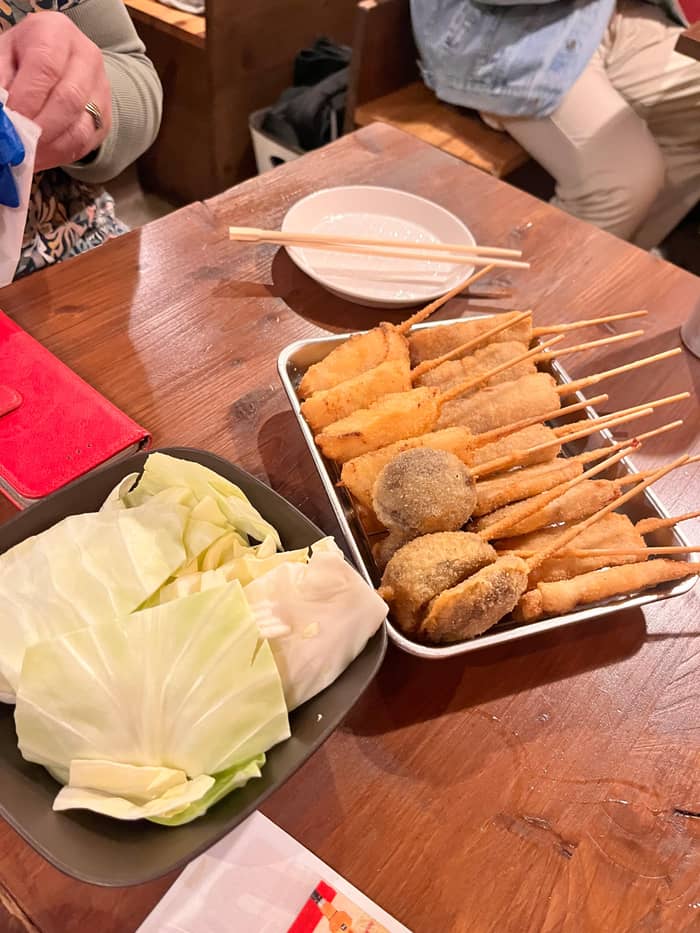
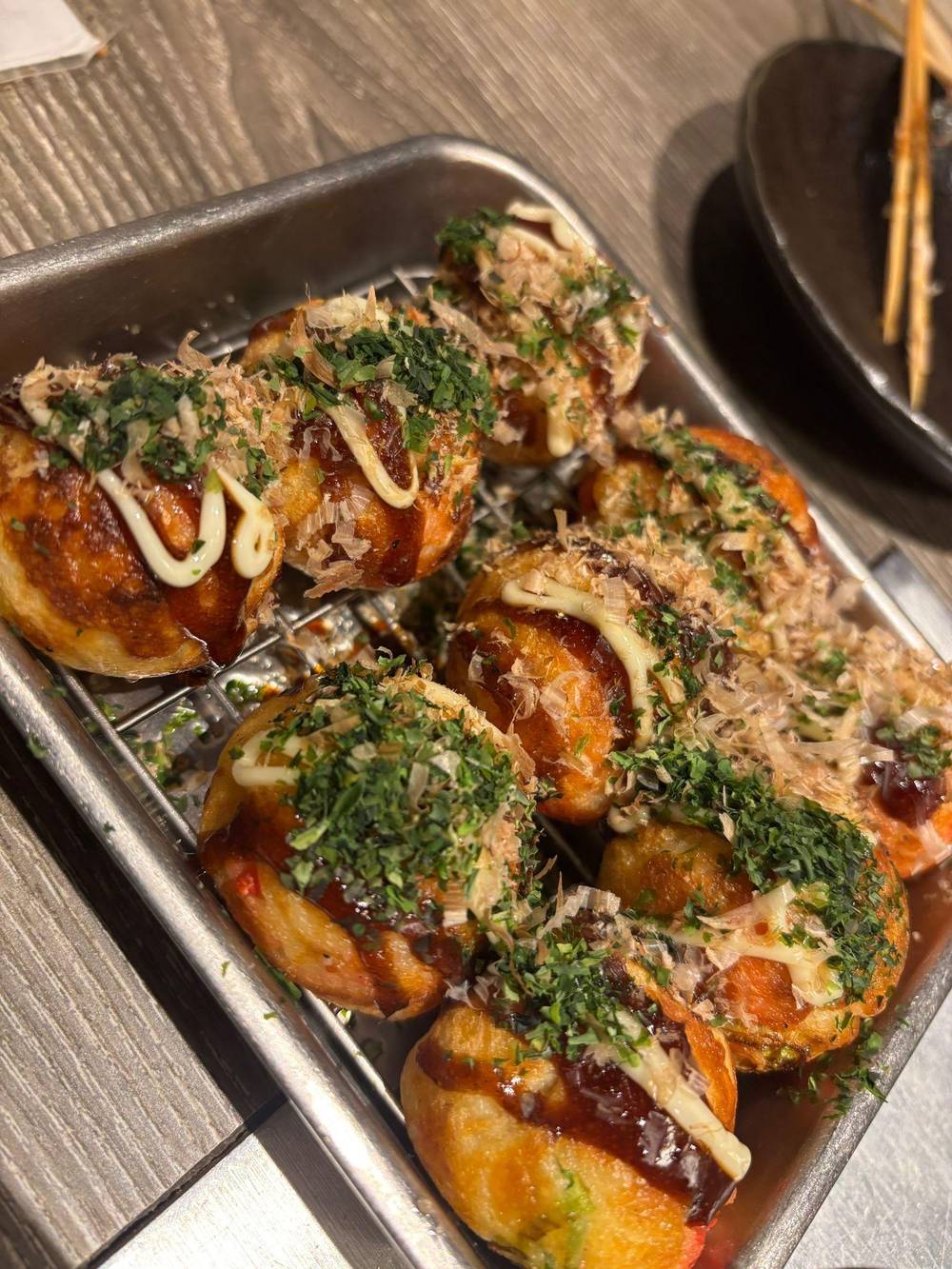
Treat takoyaki as the one firm exclusion: it is octopus in a dashi batter.6 Kushikatsu, the breaded skewers, includes vegetables among its meats, but the shared oil and sauce are things to ask about.24 If in doubt, order the dish that is obviously plant-based and eat it with pleasure.
Price your options
Choose how many are coming and see the from price of each plan added up.
4 options compared
Choose how many are coming and see the from price of each plan added up.
≈
View≈
View≈
View≈
ViewConverted at the ECB reference rate, from-prices as listed by GetYourGuide. The precise amount is shown when you book.
A diet plan that works
Before booking
Ours states what it can and cannot accommodate.
Before the date
JNTO advises notifying establishments in advance when reserving.10
In your bag
The board suggests a written card of dietary requirements.11
At the counter
Say no meat, seafood or animal products including dashi.2
When unsure
Stores stock onigiri with umeboshi or kombu.12
After the meal
Gelatin and animal fats may hide in snacks and sweets.13
Japan's tourism board says Muslim travelers should know there is no central agency for halal accreditation, though many Muslim-friendly resources exist.3 It lists the Japan Welcome Guide for Muslim Travelers, Halal Gourmet Japan, Halal Media Japan and HalalJapan.jp.17 Some restaurants hold an official halal certificate from the Halal Japan Business Association or the Japan Muslim Association.25
The surprises are in the pantry. At first glance Japanese cuisine seems halal-friendly, but cooking sake and mirin are used in many dishes, and alcohol can be found in some kinds of miso.26,13 Gelatin and animal fats such as butter may be present in breads, snacks and sweets.13 The board also says that even halal-friendly restaurants may not have a separate halal-only kitchen.27
We found no official source that names halal takoyaki in Dotonbori, so ask the stall about the batter, sauce and shared griddle before you eat. Joining a halal-friendly tour is a popular, stress-free way to travel, with guides to reliable restaurants.28 The board adds that awareness of halal and kosher diets is still far from optimal compared with vegetarianism.29
Video
Wanderlust Wellman on YouTube · The clip loads only after you tap play.
Japanese cuisine is known for its heavy use of meat and fish, and even stocks and sauces usually have some ingredients containing meat.
Listings are the clearest guide. Ours says it can partly cater to vegetarian requests, allergies and food dislikes with smaller tastings, and that gluten-free cannot be fully handled. Another Shinsekai listing with 20 dishes says full vegetarian accommodation is not offered, and a 15-dish listing says vegans cannot join.
Others are firmer. The Hungry Osaka listing says it cannot cater for gluten-free, vegan or vegetarian diets, while the backstreet night walk says a vegetarian option is available if requested at booking. That is a real difference in practice, and it is not visible from a title.
For halal, no listing here states a halal option, so ask each operator. A guide who knows in advance can sometimes choose stops, but the listing is the only promise you can rely on. Book a tour that you could cancel free up to 24 hours before, as ours can be, if the answer arrives late.
Start with a convenience store breakfast of umeboshi or kombu onigiri, which Japan's tourism board says are usually available in the fridge.12 Keep a printed card in your pocket and a plan for lunch: a restaurant where you have notified the staff in advance, or a vegetarian okonomiyaki, which the board says is not vegan because of egg.10,21
In the afternoon, take a class or a market wander where you control the ingredients. A sushi class aimed at vegans and vegetarians in Dotonbori lasts 1.5 hours from $45. In the evening, look for a restaurant with an official vegan or vegetarian sticker, and say clearly that dashi is a problem.18,2
Do not be discouraged if the day takes more planning than a normal one. Osaka's tourism bureau notes that vegan-friendly restaurants are on the rise, and each good meal you find makes the next easier.8 Write down the names of the places that worked, and tell the next traveler.
FAQ
Ours can somewhat accommodate vegetarians, but tastings may be reduced.
Osaka dashi is made from kelp and bonito flakes, and sardines are used too.5
JNTO suggests printing your dietary requirements in Japanese.11
Osaka's tourism bureau says the number of vegan-friendly restaurants is increasing.8
It lasts 1.5 hours from $45.
Our listing cannot fully accommodate gluten-free, and tastings will be reduced.
Sources
More to read
Questions about the Shinsekai food walk? A real person replies here.