Everyday market
Kuromon arcade
Eat-in counters and skewers
See the guided walkFind a stop on the map
View 18 stops
Pick a route, then tap a marker or a stop for notes and a Google Maps link.
A dining area on the first basement floor of Umeda Sky Building.
Google MapsKnown for yakiniku restaurants in its crowded backstreets.
Google MapsA culinary hub and the historic Korean Town of Osaka.
Google MapsA wholesale market a 3-minute walk from Daikokucho Station.
Google MapsThings kick into full swing around 6 PM.
Google MapsMost visitors come for the restaurants; kushikatsu is the signature.
Google Maps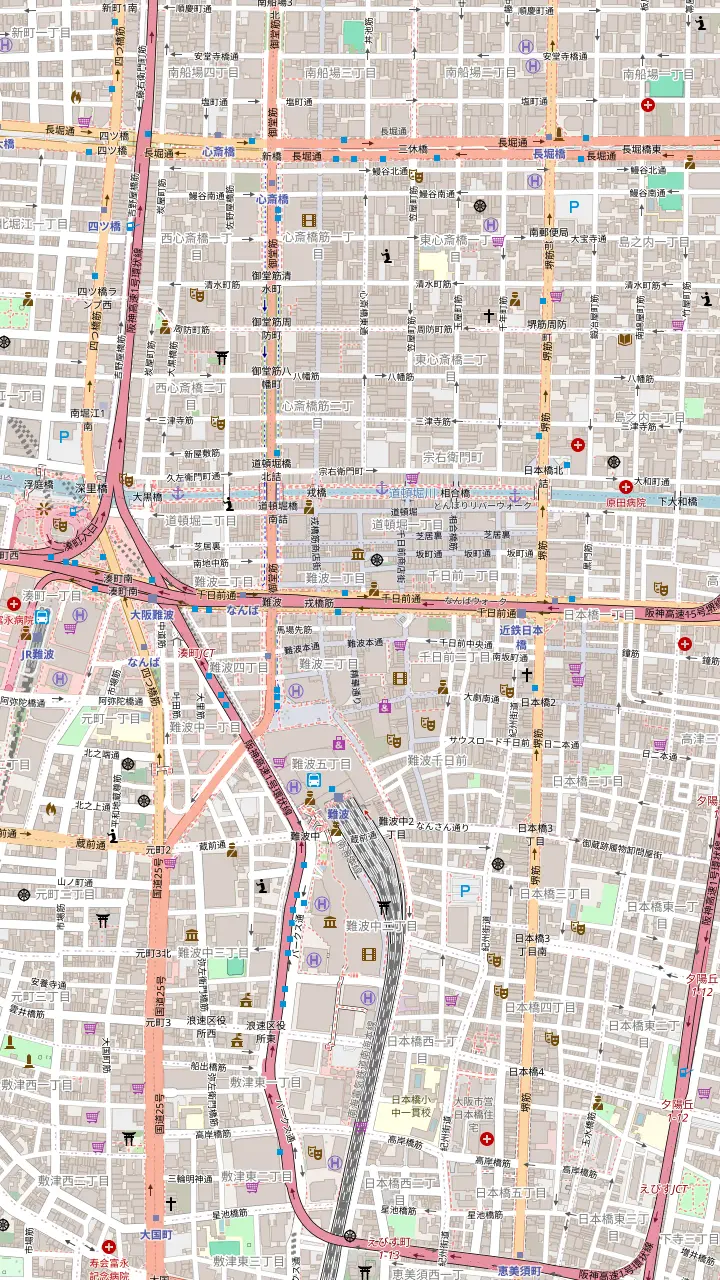
Dotonbori is right outside Namba Station, with giant crabs, octopuses and pufferfish on its signs.
Google MapsA 100-meter alley of kappo, oden, yakitori and sushi restaurants.
Google MapsThe standing-bar district, with over 100 restaurants.
Google MapsAbout 150 stores under a 580-meter arcade.
Google MapsKitchen tools and food samples, 3 minutes on foot from Namba Station.
Google MapsThe station right outside Dotonbori, on the Nankai, Kintetsu and Osaka Metro lines.
Google MapsA riverside promenade that has become popular.
Google Maps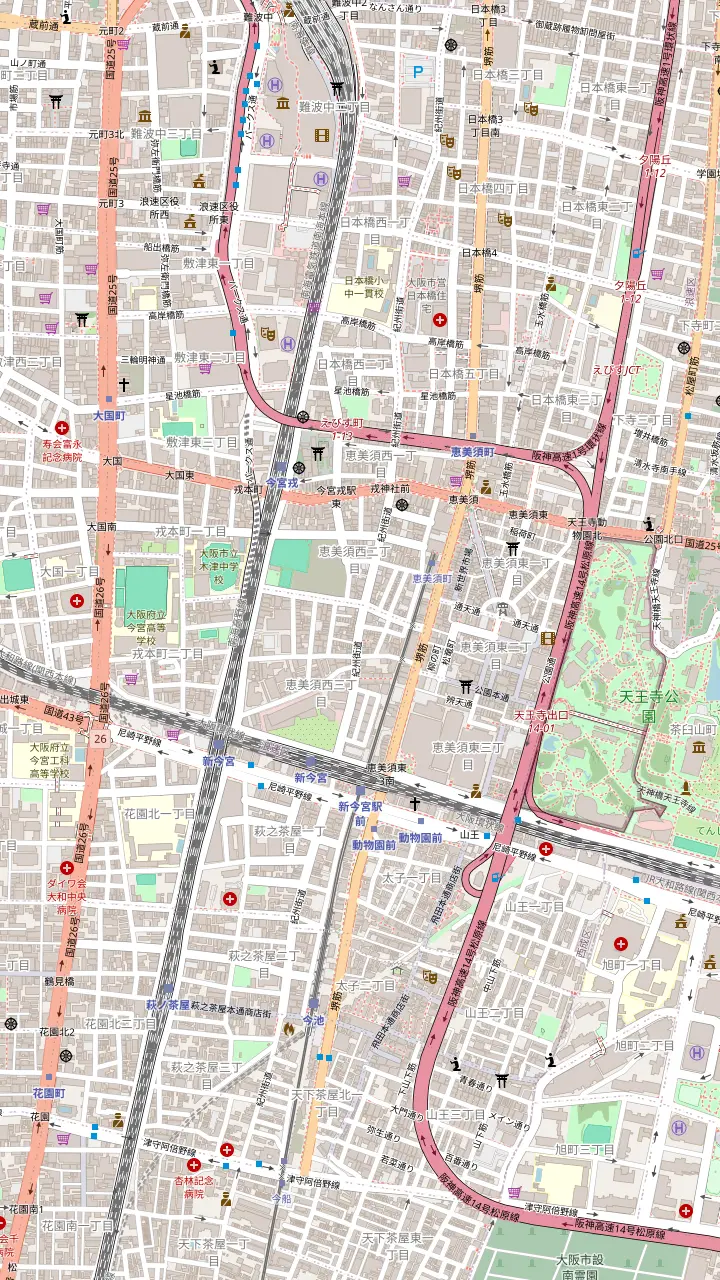
The second tower is 108 meters tall, including the lightning rod.
Google MapsAbout 180 meters of kushikatsu shops and other eateries.
Google MapsA 5-minute walk to Jan-Jan Yokocho; the guided food walk meets 1 minute from Exit 5.
Google MapsA 6-minute walk to Tsutenkaku from the JR Osaka Loop Line.
Google MapsA 3-minute walk to Tsutenkaku on the Sakaisuji Line.
Google Maps© OpenStreetMap contributors, map data
A covered arcade of fish stalls, skewers and eat-in counters in Minami. Here is where it came from, what you can eat there, how it differs from a wholesale market and what sits around it.
Editorial team, osakafood.quest · Updated November 6, 2026 · 7 min of reading
Key facts
Kuromon Market is a covered shopping arcade in the Minami district of Osaka. The Osaka Convention & Tourism Bureau counts approximately 150 stores under a 580-meter arcade,1 which is long enough that you will want a plan before you walk in. The bureau describes a market with a focus on fresh fish that also sells everything from fruit to processed foods.2
Two nicknames sum it up. People call it Osaka's kitchen and Osaka's stomach,5 and both names point at the same idea: this is where the city buys its food, not a stage set built for visitors. Chefs and home cooks shop beside travelers, and the stalls are set up to sell, not to put on a show.
For a traveler the practical meaning is simple. You can treat the arcade as a grazing route, eating a little at a time instead of sitting down to one big meal. The bureau adds that the market has also become popular with foreign tourists,6 so expect to share the aisle, and expect stall signs that are written with visitors in mind.
Three food stops
| Place | What it is | Scale | Nearest station |
|---|---|---|---|
| Kuromon Market | A retail arcade with an eat-in corner3 | About 150 stores1 | Near Nipponbashi |
| Kizu Market | A wholesale market with a public morning market15 | About 150 wholesalers16 | Daikokucho, 3 minutes17 |
| Doguyasuji street | Kitchen utensils and food samples18 | 150 meters13 | Namba, 3 minutes19 |
Counts and walking times are those given by the Osaka Convention & Tourism Bureau; shop numbers change over time.1,16
The market began in the late Edo period, when merchants brought fish to the area around Enmyoji Temple to buy and sell.7 The name Kuromon comes from that temple's black gate,4 so the market's name is a memory of a gate that no longer stands.
The temple and its gate burned down during the Meiji period,8 yet the market outlived both. It became an officially recognized market in 1902.9 That is a useful detail when you walk the arcade: a trading place can keep its name for generations after the building that gave it that name has gone.
In the Showa period the market was bustling throughout the day. Chefs came in the early morning, general shoppers followed until around 3 PM, and restaurant professionals arrived after that.10 Hours have probably moved since then, but the sequence is worth knowing: this is a market built for cooks, and the daytime is when it works best.
Kuromon Market street food is easiest to meet at the eat-in corner, where you can casually enjoy sushi, seafood bowls, tempura bowls and more.3 This is the option for a sit-down meal under the roof, and it suits travelers who do not like eating while they stand. A seafood bowl is a good first order because you see exactly what you are paying for.
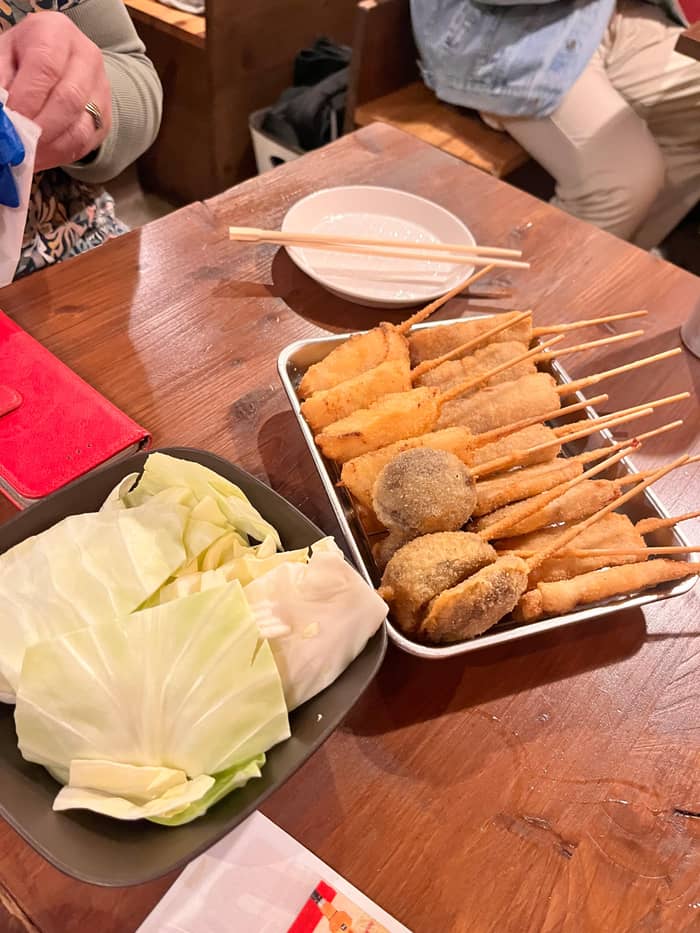
The second option is the snack route. The bureau notes that there is also skewered meat and fish, which it calls a paradise for food lovers.24 Skewers are the natural walking food here, as they come hot, they are easy to hold and they let you try several stalls without committing to a full portion. Take small bites, share a skewer if you are with someone and keep your hands free for the next stall.
A third group of products is meant for the kitchen, not the street. People often buy whole fugu fillets for their tetchiri hotpot at home,25 and you will see the same logic in stalls that sell cuts of fish by the piece. Admire them, ask what they are, and then decide whether you want a prepared snack instead. Carrying raw fish through a warm day without a cool box is not a good plan.
Choose your market
Match your mood to the row and head for the right place
If I want to graze and sit down for a bowl
Kuromon eat-in corner
It serves sushi, seafood bowls and tempura bowls.3
If I want to see how chefs shop
Kizu on a morning-market Saturday
Chefs buy there, and the public opens on set Saturdays.21,15
If I want a takoyaki pan to take home
Doguyasuji street
The bureau rates its flour-food utensils the best in Japan.22
If I want a guide to pick the stops
The Shinsekai food walk
It runs 3 hours with 4 eateries and a guide in English.
If I want a drink after the market
Ura-Namba
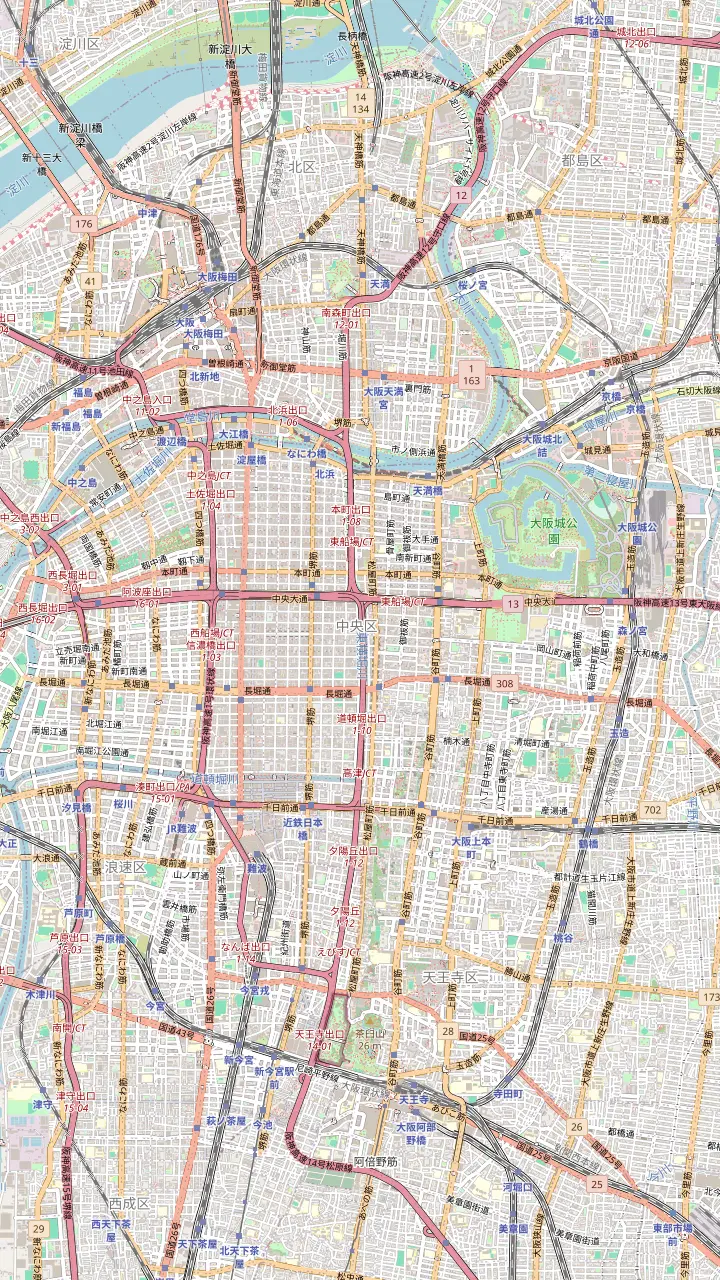
Kuromon sits on the district's east side.23
Pick your market morning
Everyday market
Eat-in counters and skewers
See the guided walk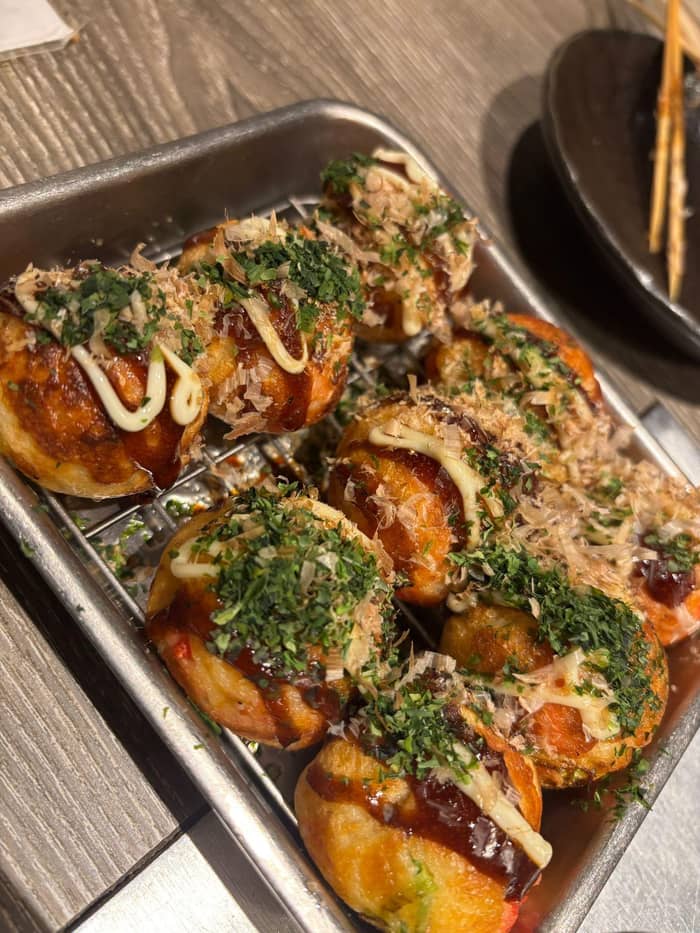
Saturday option
Tastings and auctions
See the guided walk
Souvenir stop
Tools and food samples
See the guided walkGo in the daytime. The bureau's history of the market describes chefs shopping in the early morning and general shoppers until the afternoon,10 and that daytime pattern is still the best guide for a visit. Stalls set their own hours, so if one stall is the reason you came, check it before you travel and keep a fallback in mind.
The year-end is the exception to any calm plan. At the end of the year the market is especially crowded with shoppers preparing for the New Year.11 If you are in Osaka in late December, expect to move slowly and to queue for the things you want. Outside that window you can usually take your time, though the covered arcade does fill up whenever the weather is poor.
Plan around your appetite, not around the clock. A good pattern is to walk the whole 580 meters once without buying anything,1 note the stalls that look best and then double back to eat. That costs a little time and saves you from filling up on the first skewer you meet. Carry a small bag for your rubbish and your wrappers, since you will be eating as you go.
A market's story
Late Edo period
Merchants brought fish to the area around Enmyoji Temple to buy and sell.7
Meiji period
The temple and its black gate were burned down in this era.8
1902
The market became an officially recognized market in that year.9
Showa period
Chefs shopped early, general shoppers until around 3 PM, trade professionals after.10
End of the year
Shoppers crowd the market to prepare for the New Year.11
Two neighbors are worth the detour. Ura-Namba stretches from Sennichimae in the north to Nansan-dori in the south, with Kuromon Market on its east side and Takashimaya on the west,23 which means the market and the bar district share an edge. After you have eaten in the arcade you can walk into the small bars and standing counters of Ura-Namba without leaving the neighborhood.
Doguyasuji shopping street is a 3-minute walk from Namba Station and stretches 150 meters.19,13 It is lined with stores for food samples, lanterns, decorative signs, tableware and kitchen utensils.18 The bureau goes as far as to say that its selection of utensils for takoyaki and okonomiyaki is the best in Japan,22 so it is the natural place to buy a takoyaki pan or a set of tools as a souvenir.
If you want something to take home that is not edible, try the food replica experience in the same Sennichimae district. Food samples are made using traditional wax,39 and the finished pieces come in special containers so you can take them home on the day.40 It is a hands-on way to fill a spare hour between meals, and the result is lighter in the suitcase than a bag of fugu.
Video
PiQtour Japan on YouTube · The clip loads only after you tap play.
earning it the nicknames "Osaka's kitchen" and "Osaka's stomach."
Market kit
Kuromon is not the only food market on the south side of town. Kizu Market has a history of over 300 years and houses approximately 150 wholesalers, including seafood and produce vendors.41,16 It is near Daikokucho Station, one stop south of Namba,42 and the wholesale site is a 3-minute walk east from Exit 1 of that station.17
The difference is who it serves. Kizu is known for professional chefs who handle high-quality goods and come there to buy,21 while Kuromon is a retail arcade that welcomes walk-in visitors every day. Kizu opens to the public on a schedule: a morning market runs on the second and last Saturdays of each month from 9:00 AM to 12:00 PM.15
When it is open, that morning market is a different kind of outing. There are plenty of tastings, auction experiences and raffles,20 and in the summer you can barbecue ingredients bought at the market in the adjacent venue.43 If your trip includes one of those Saturdays, it makes a good counterpoint to Kuromon. If it does not, Kuromon is the market that fits any day you have.
Kuromon rewards people who are comfortable wandering, pointing and ordering in small portions. If you would rather have someone choose the stops and tell you what you are eating, a guided walk is the alternative. The food tour this site is built around runs for 3 hours with 4 eateries and 18 foods and 3 drinks, led by a guide in English.
Be clear about where it goes. That walk meets in Shinsekai and covers that neighborhood, not Kuromon. The two experiences complement each other: Kuromon gives you an open-ended market and Shinsekai gives you a structured evening of fried skewers and street snacks. Many travelers will want one of each, on different days.
A sensible split for a two-day food plan is to give one morning to Kuromon and its neighbors and keep an afternoon or evening for the guided route. Eat lightly at the market, then arrive at the tour hungry. The route page on this site explains how to build a self-guided crawl from the same pieces if you want to try the walk first without a guide.
FAQ
It has approximately 150 stores under a 580-meter arcade.1
The name comes from the black gate of the temple that stood here.4
It serves sushi, seafood bowls and tempura bowls.3
The bureau lists skewered meat and fish among the market's food.24
Shoppers crowd in to prepare for the New Year.11
Kizu is a wholesale market near Daikokucho Station, one stop south of Namba.42
The street is a 3-minute walk from it.19
It meets in Shinsekai and lasts 3 hours.
Sources
More to read
Questions about the Shinsekai food walk? A real person replies here.